
Red Light Therapy for Skin Care: Why Your Skin Responds to Light Better Than Most Creams

You wake up, walk to the bathroom, and catch yourself in the mirror. The face looking back at you is yours, but something has shifted. A line that was not there last year. Skin that looks a little less firm than it used to. Maybe a dullness that no amount of sleep seems to fix.
You are not imagining it. Skin starts losing collagen in your mid twenties, and the process quietly accelerates from there. By the time most people notice the signs, it has already been happening for years.
The good news is that there is now a way to slow that process down that does not involve needles, surgery, or a 30 step skincare routine.
Red light therapy for skin care has been used by dermatologists and aesthetic clinics for decades, and the research behind it is some of the most consistent in non invasive skin care. Recently, devices have become small and affordable enough to use at home, which changes the equation entirely.
This guide covers how red light therapy works on skin, what the science actually says, which devices to use and how to build it into your routine.
What is Red Light Therapy?
Light is something most of us take for granted. It illuminates a room, it tells us it is morning, it makes things visible. But certain frequencies of light do something far more interesting than that. They interact with living cells in ways that can change how those cells behave.
The key is frequency. Light travels in waves, and the size of those waves is measured in nanometers (nm). The full spectrum runs from gamma rays at one extreme to radio waves at the other, with visible light sitting in the middle.
What we can actually see with the naked eye, the colors from violet to red, occupies only a tiny slice of that spectrum. Beyond that narrow window, light becomes invisible, but it does not become inert. Ultraviolet light burns your skin. Infrared light warms it. And red light, it turns out, does something far more interesting than either.
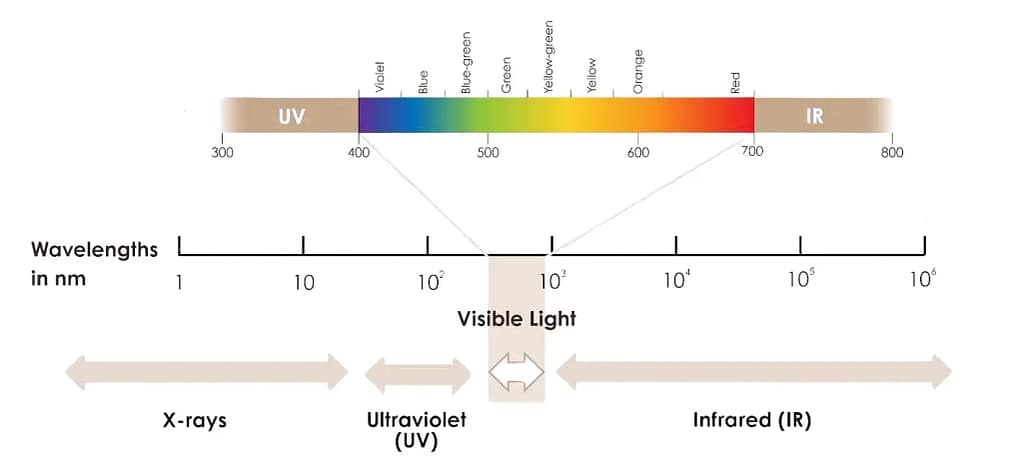
The same light that looks identical to the human eye can behave in completely different ways depending on its wavelength.
UV light sits at the high energy end of the spectrum. It hits the surface of the skin hard and gets absorbed almost immediately, which is precisely why prolonged exposure causes burns and long term damage. It never makes it past the outermost layer.
Visible red light, in the range of 630 to 670 nm, carries less energy but travels significantly further. It penetrates several millimeters into the skin, deep enough to reach the dermis where collagen is produced and where the cells that keep skin looking young actually live.
Near infrared light, between 810 and 850 nm, is invisible to the naked eye but goes deeper than red light. It reaches below the dermis into underlying tissue, which is why it is used for muscle recovery, joint health and deeper cellular repair.
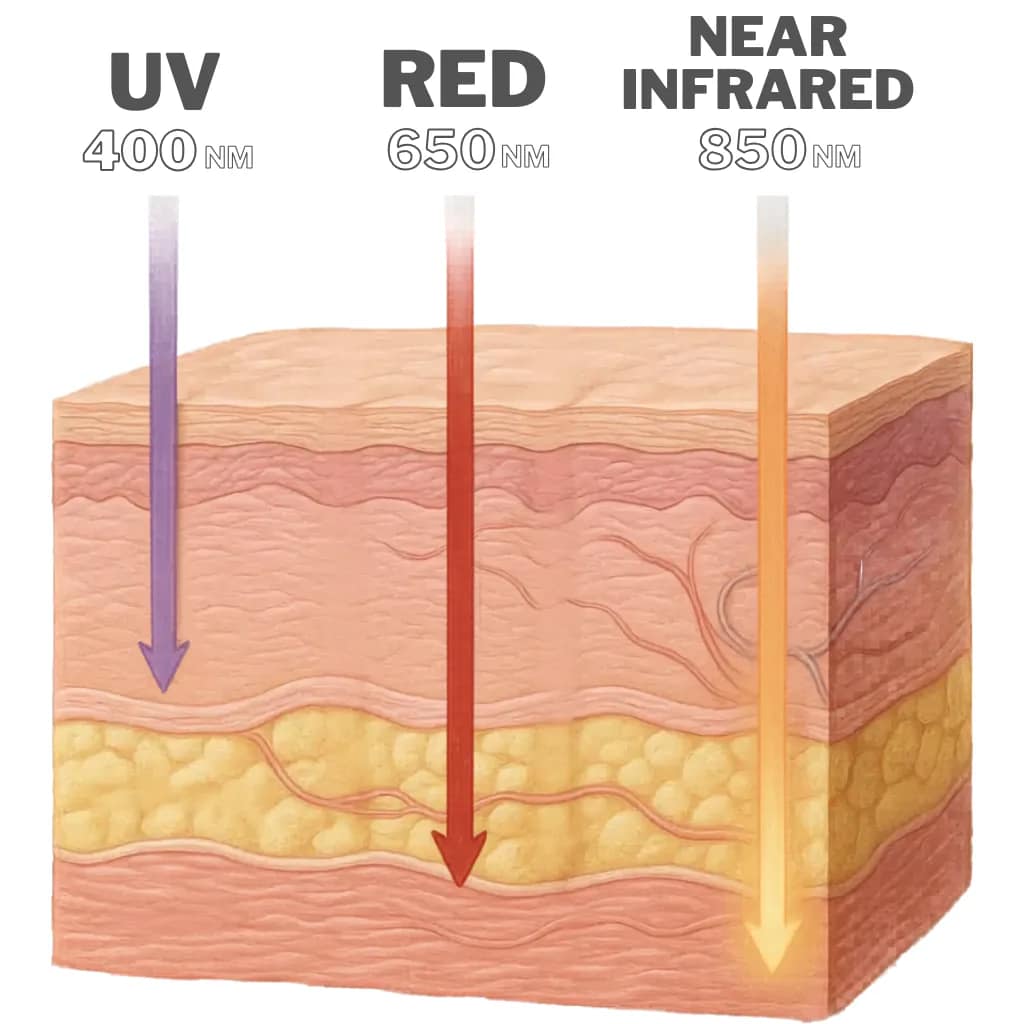
For skin care specifically, red light is where most of the research is concentrated. It hits the right depth to stimulate the cells that matter most, without damaging the surface the way UV does.
How Does It Work?
When red light hits your skin it does not just bounce off. It goes deeper, into the layer where your skin actually does its work, and it wakes things up. Here is what happens.
Improves Collagen Production
Collagen is what keeps skin firm and tight. Elastin is what makes it bounce back when you press it. Both of them drop as you get older, and that is what causes the lines, the sagging and the general tiredness that starts showing up in your thirties.
Red light pushes the cells responsible for making collagen and elastin to produce more of both. A study found that daily red light exposure significantly increased collagen, elastin and hyaluronic acid in human skin tissue. Not on the surface. Inside the skin, where it actually counts.
Reduces Wrinkles
A clinical trial with 136 volunteers showed that people treated with red light had measurably less rough skin, better skin tone and higher collagen density compared to people who received no treatment. Independent physicians reviewed clinical photographs taken before and after treatment and confirmed significant visible improvement in the treated group.
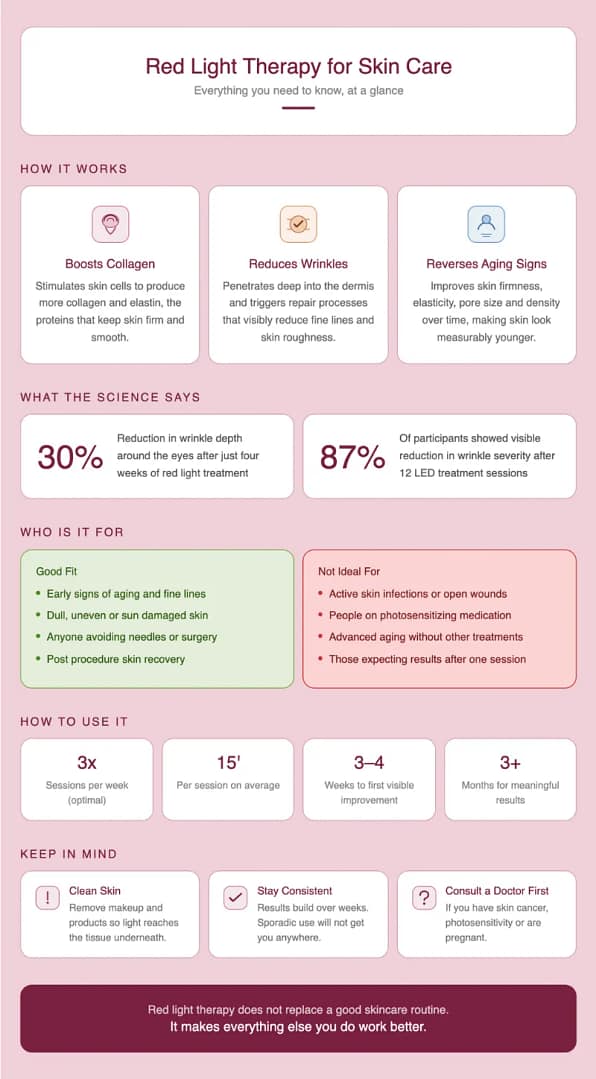
Another study found that red light reduced wrinkle depth around the eyes by 30% in just four weeks.
Slows Down the Aging Process
Think about what aging skin actually looks like. It gets looser. Lines get deeper. The skin loses its glow and starts to look tired even when you are not. That happens because the inside of your skin is slowly producing less of everything it needs to stay healthy.
Researchers used a red LED face mask twice a week for three months and measured what happened. Wrinkles got shallower. Skin got firmer. Pores tightened. Elasticity came back. The density of the dermis, the deep layer that gives skin its structure, actually increased. And the results did not take months to appear. They showed up early in the treatment and kept building from there, regardless of the age of the person being treated.
Who Is It Best For?
Red light therapy works on living skin tissue. That sounds obvious, but it matters. It is not a procedure that removes something or fills something in.
It works by giving your skin cells the signal and the energy to do their job better. Which means it works best when those cells are still there and still capable of responding.
The good news is that is true for most people.
Red light therapy is a good fit if you are:
- Starting to notice the first signs of aging, fine lines, slight loss of firmness, dull or uneven skin tone
- In your thirties, forties or fifties and want to slow down what is happening without going near a needle or a clinic
- Someone who already has a basic skincare routine and wants to add something that actually works at a deeper level
- Dealing with sun damaged skin or uneven texture from years of sun exposure
- Recovering from a skin procedure and looking to support healing and reduce redness
It is less likely to help if you are:
- Expecting results after one or two sessions. This is not a quick fix, it is a process that builds over weeks
- Looking to replace treatments like fillers or resurfacing procedures for advanced skin aging. Red light works best earlier, not as a last resort
- Someone with an active skin infection, open wounds or certain photosensitive conditions. In those cases consult a doctor first
One thing worth saying clearly: red light therapy is not a miracle. What it is, is one of the most well researched non invasive tools available for keeping skin healthier for longer. The people who get the most out of it are the ones who start before things get bad and stick with it consistently.
How to Use It?
The good news about red light therapy for skincare is that it is genuinely simple. You do not need to change your routine, buy a dozen products or set aside a lot of time. You just need to be consistent.
A clinical study that produced some of the strongest results in the research used two sessions per week over three months, each session lasting around 12 minutes.
Another research found that daily use of red and near infrared light for 8 to 10 weeks produced the best results for reducing lines and improving skin texture. While there is no single perfect protocol, the direction is clear: consistent use over several weeks, not occasional use over several days.
Recommended schedule:
| Mon | Tue | Wed | Thu | Fri | Sat | Sun | |
|---|---|---|---|---|---|---|---|
| Session | ✓ | ✓ | ✓ | ||||
| Duration | 15 min | 15 min | 15 min |
Before each session:
- Wash your face and remove any makeup, SPF or moisturizer. Products on the skin can block light from reaching the tissue underneath
- Do not use retinol or exfoliating acids immediately before a session as they make skin more sensitive to light
During each session:
- Keep the device at the distance recommended by the manufacturer
- Close your eyes or use protective goggles, especially with face masks
- Do not exceed the recommended session time. More is not better here
After each session:
- Apply your moisturizer or serum immediately. Your skin is in an active state and absorbs products better right after treatment
- Avoid direct sun exposure for at least an hour after each session
What to realistically expect:
- Weeks 1 to 2: no visible changes yet, but cellular processes have already started
- Weeks 3 to 4: skin may start to feel smoother and look more even
- Weeks 6 to 8: first visible improvements in fine lines and firmness
- Months 3 and beyond: continued improvement with consistent use, results plateau without maintenance sessions
What Devices Can You Use?
For skin care, the device you choose matters more than it does for other applications. The face is a small, delicate area with specific needs, and not every device is designed with that in mind.
Here is what is available and what each one is best for.
Face Masks
Face masks are the most practical option for anyone who wants to treat their whole face in one go. You put it on, set a timer and do nothing for 10 to 15 minutes.
The light covers your entire face evenly, which means every area gets the same exposure at the same time. This is the closest thing to what is used in clinical studies, and for overall skin rejuvenation, anti aging and texture improvement it is the most logical choice for home use.
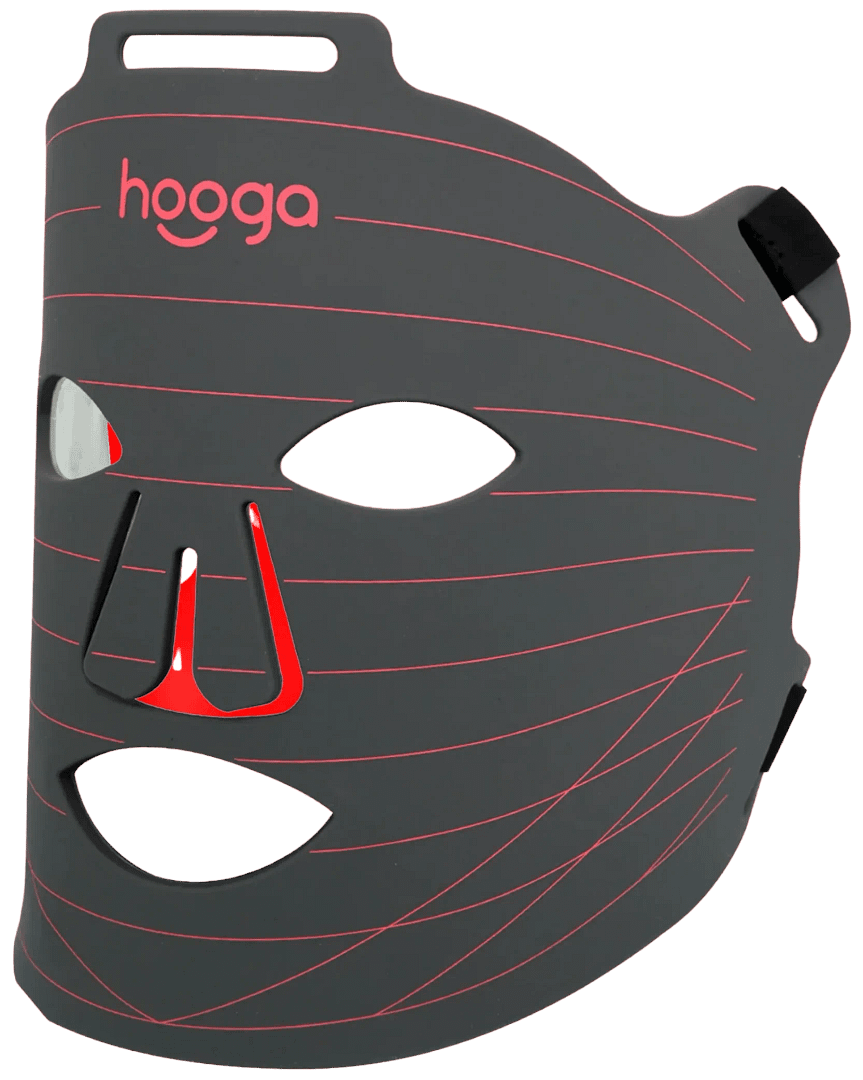
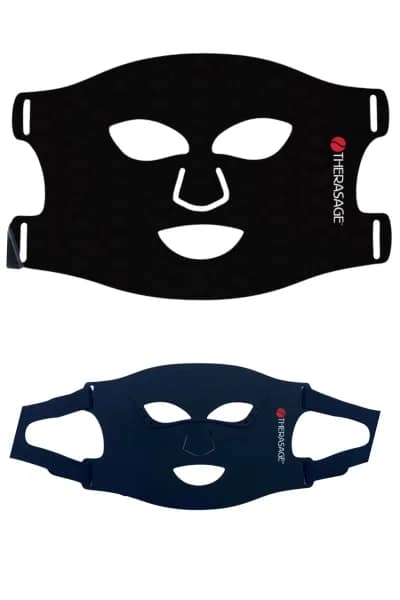
🥈Therasage TheraGlow Mask2Go
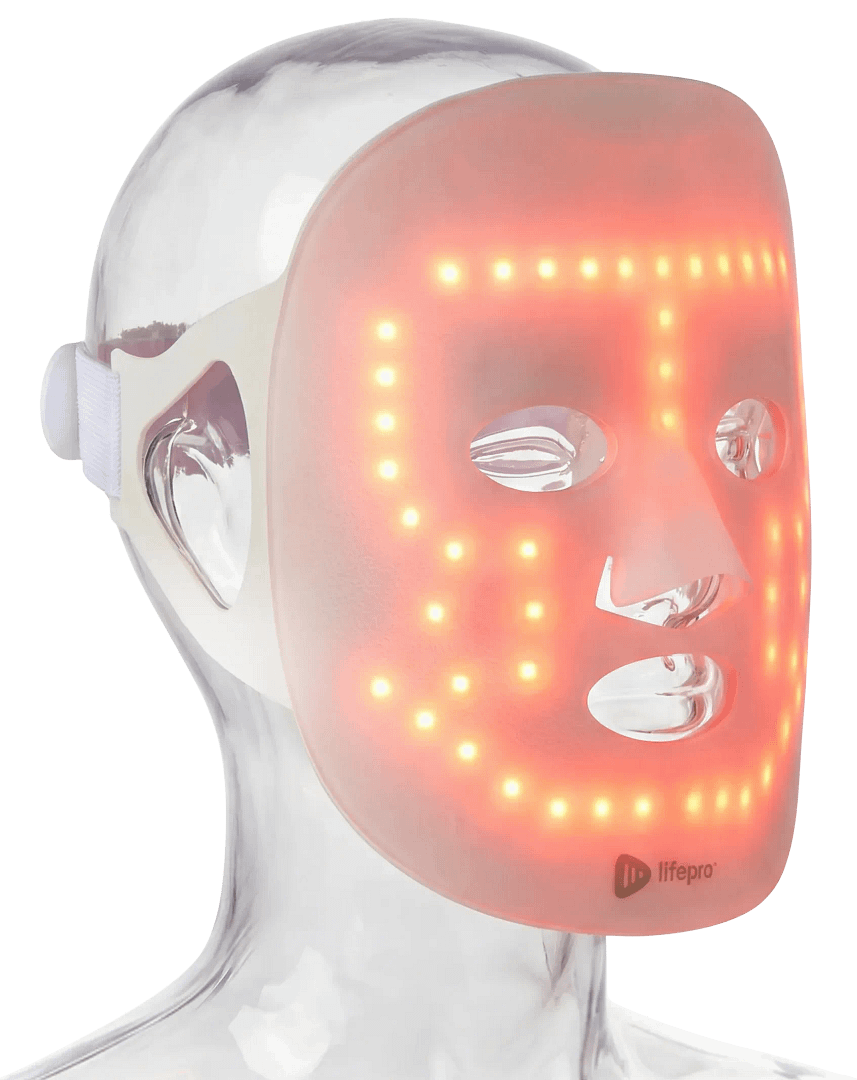
🥉LifePro RevitaGlow
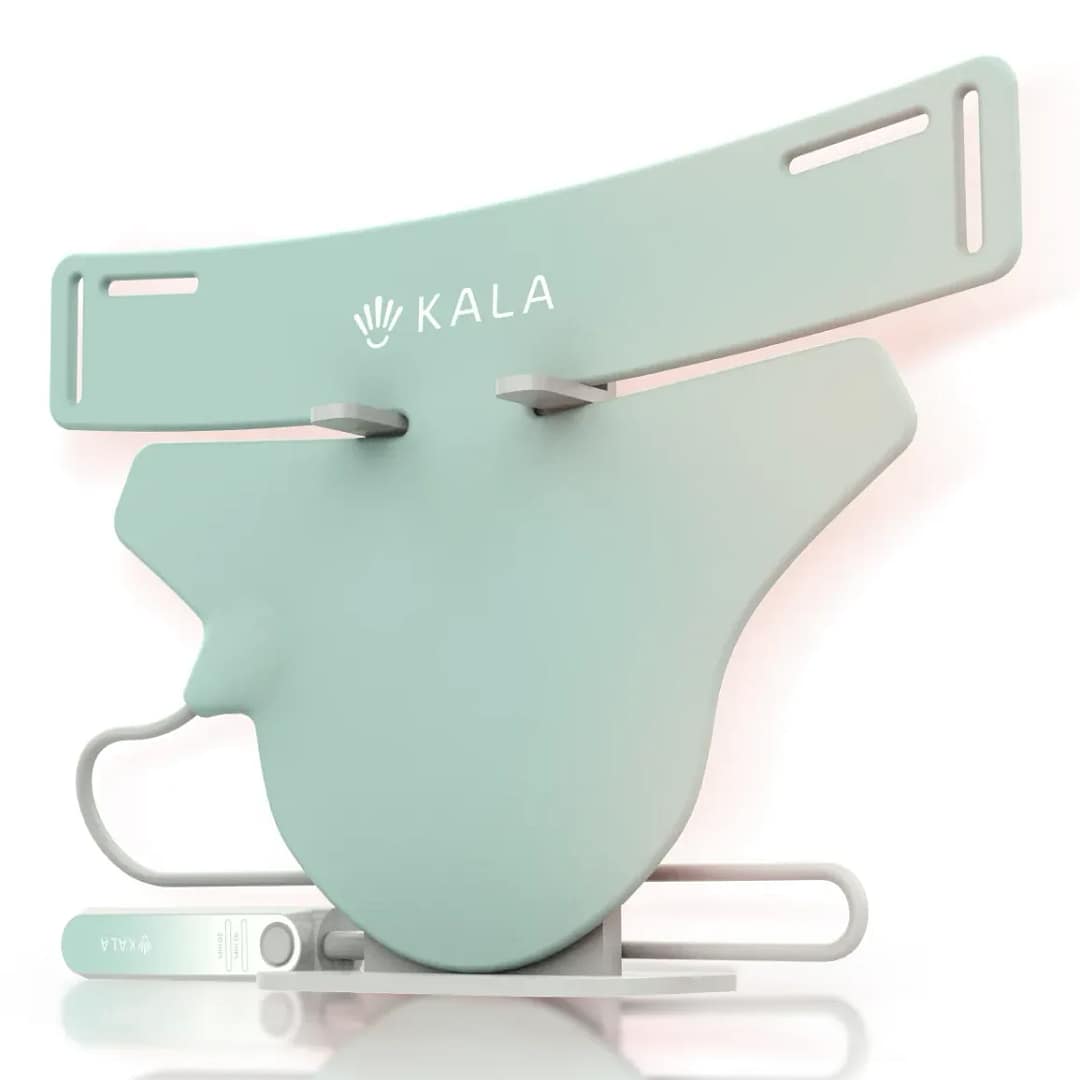
Neck Rejuvenators
The neck is one of the first places to show signs of aging and one of the most commonly ignored areas in any skincare routine. Skin there is thinner than on the face, loses elasticity faster and is constantly exposed to the same sun and environmental damage.
Neck rejuvenators are shaped specifically to wrap around the neck and décolletage, delivering light directly to that area. If you are investing in your face but ignoring your neck, the contrast will eventually become obvious.
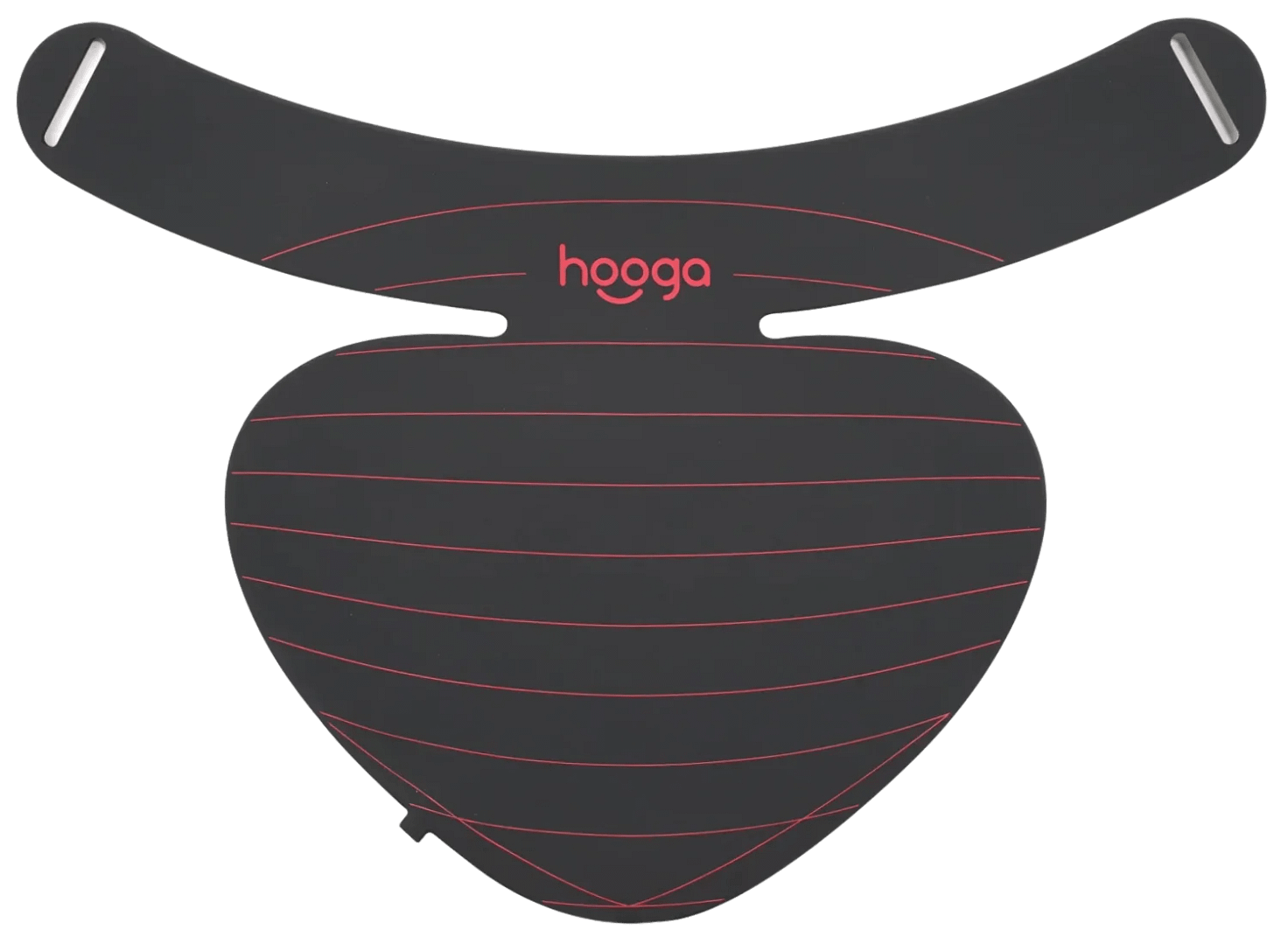
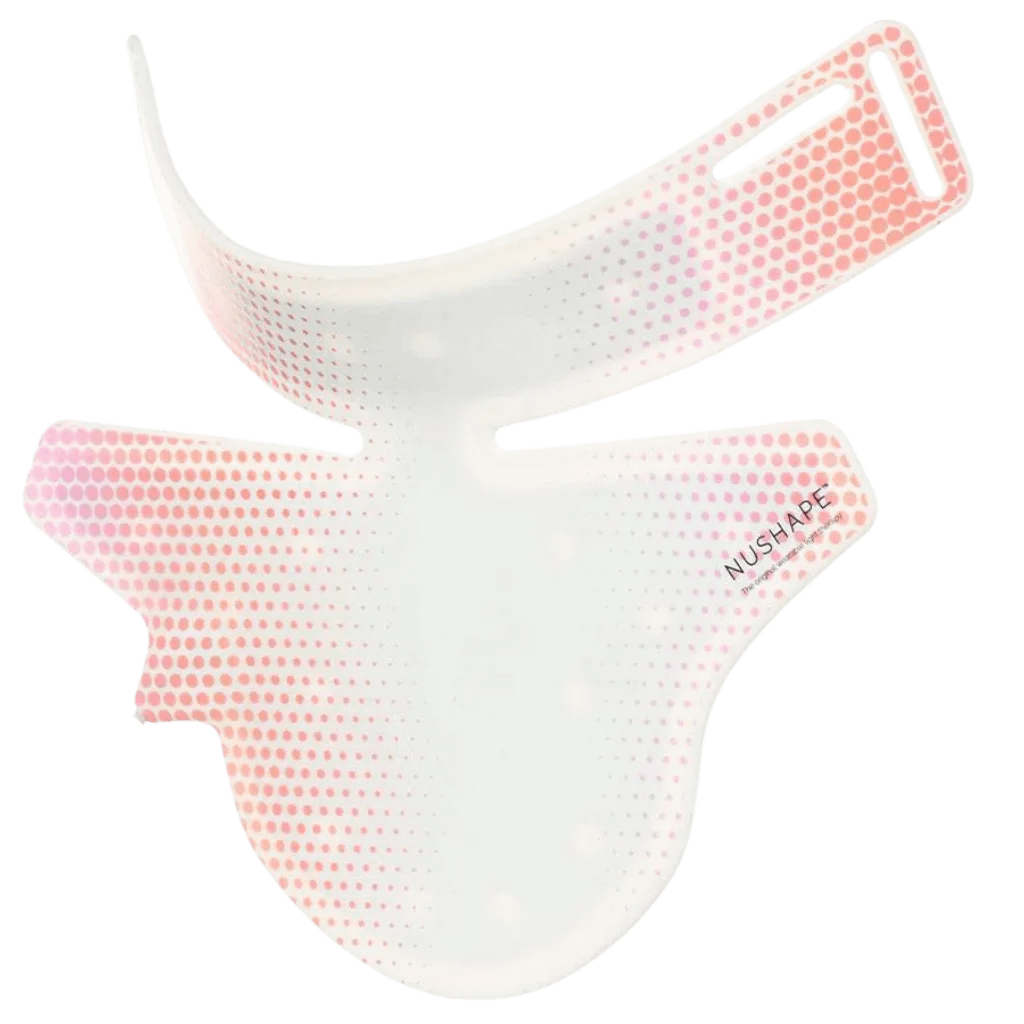
Wands and Torches
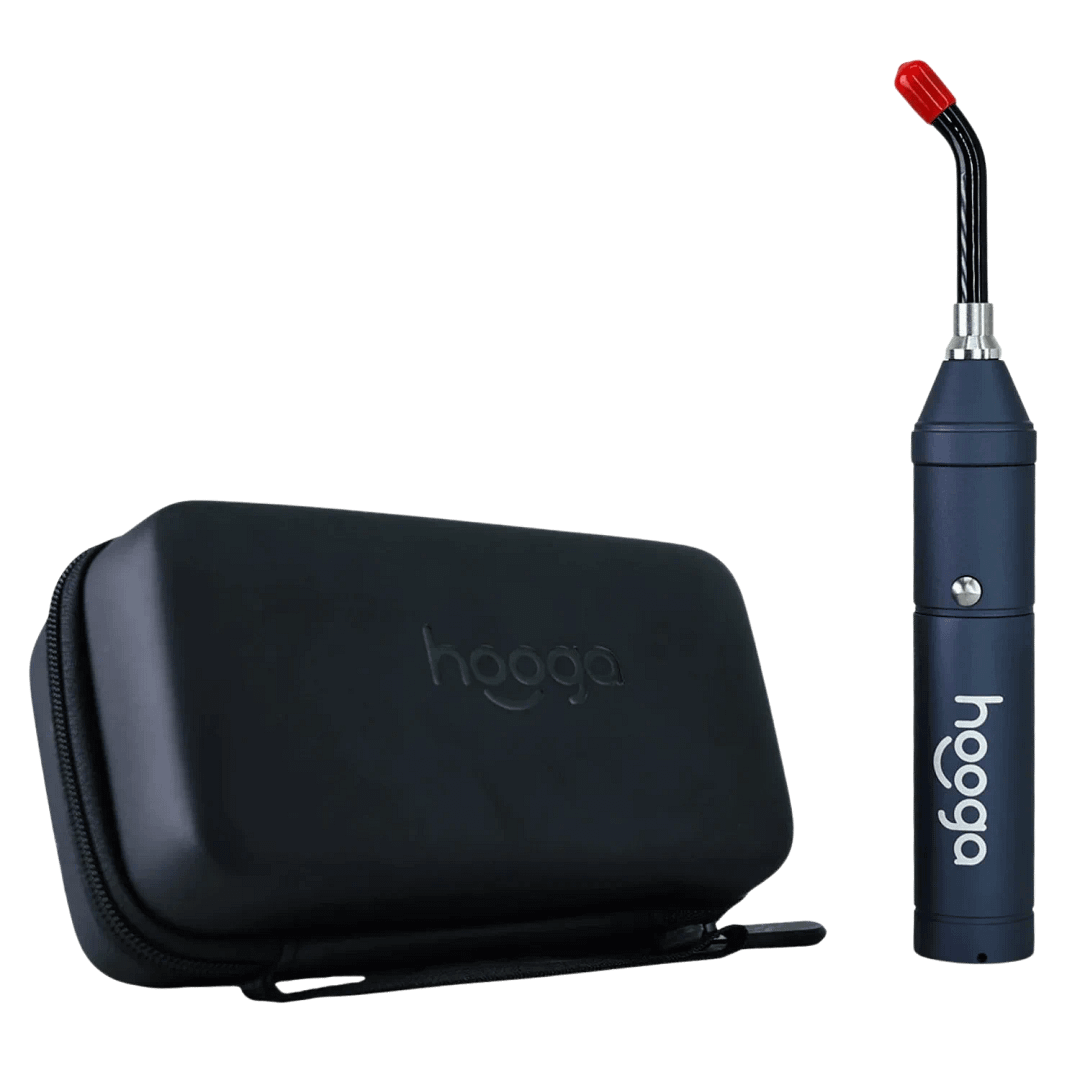
Wands and torches are handheld devices you move across the skin yourself. They give you precision that a full face mask cannot, which makes them good for targeting specific spots: a line around the eyes, an area of uneven texture, a stubborn patch of sun damage.
They require more time and attention than a mask because you are treating one small area at a time. They work well as a complement to a mask, for finishing off areas the mask does not reach as effectively.
Read: The Best Red Light Therapy Wands & Torches for Skincare
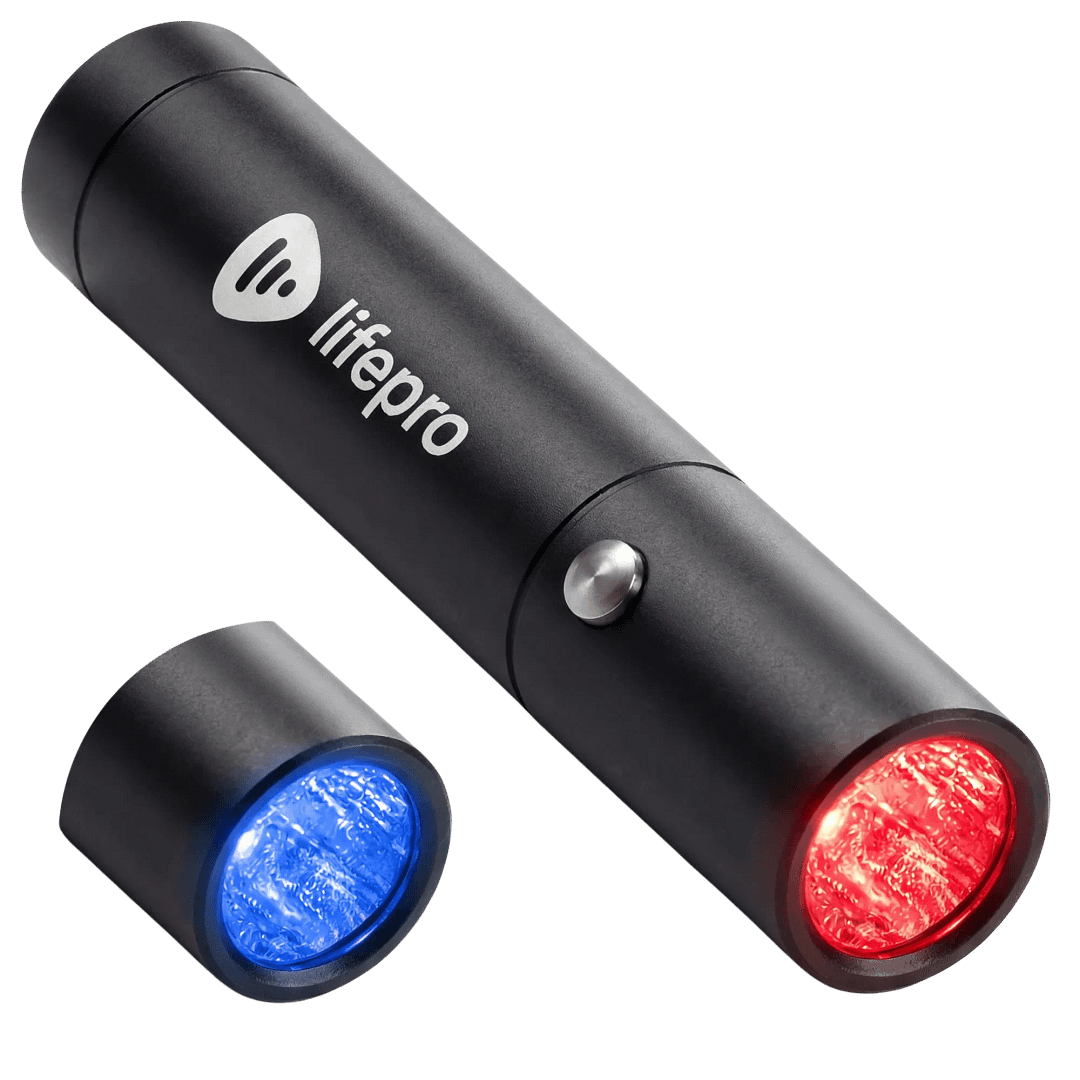
🥇LifePro RLT Torch
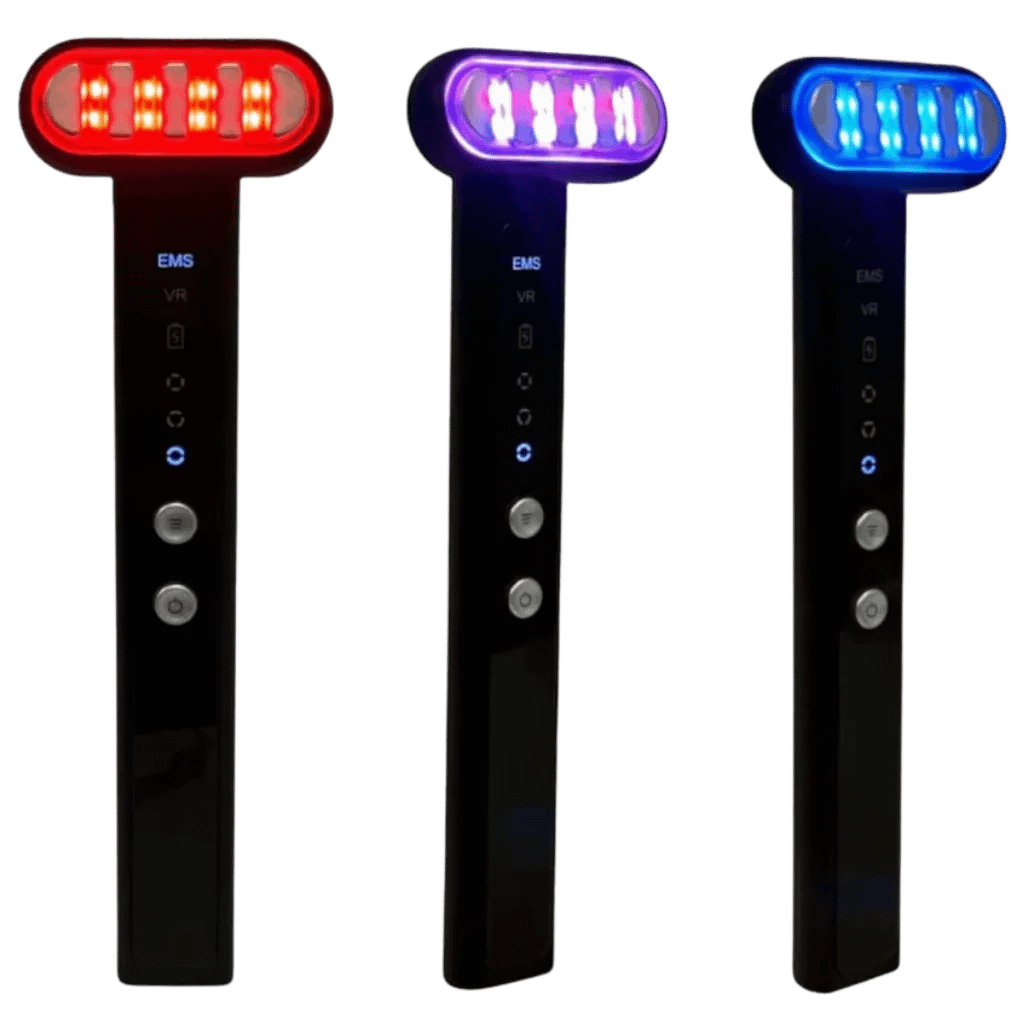
🥈Therasage TheraSculpt
Full-Body Panels
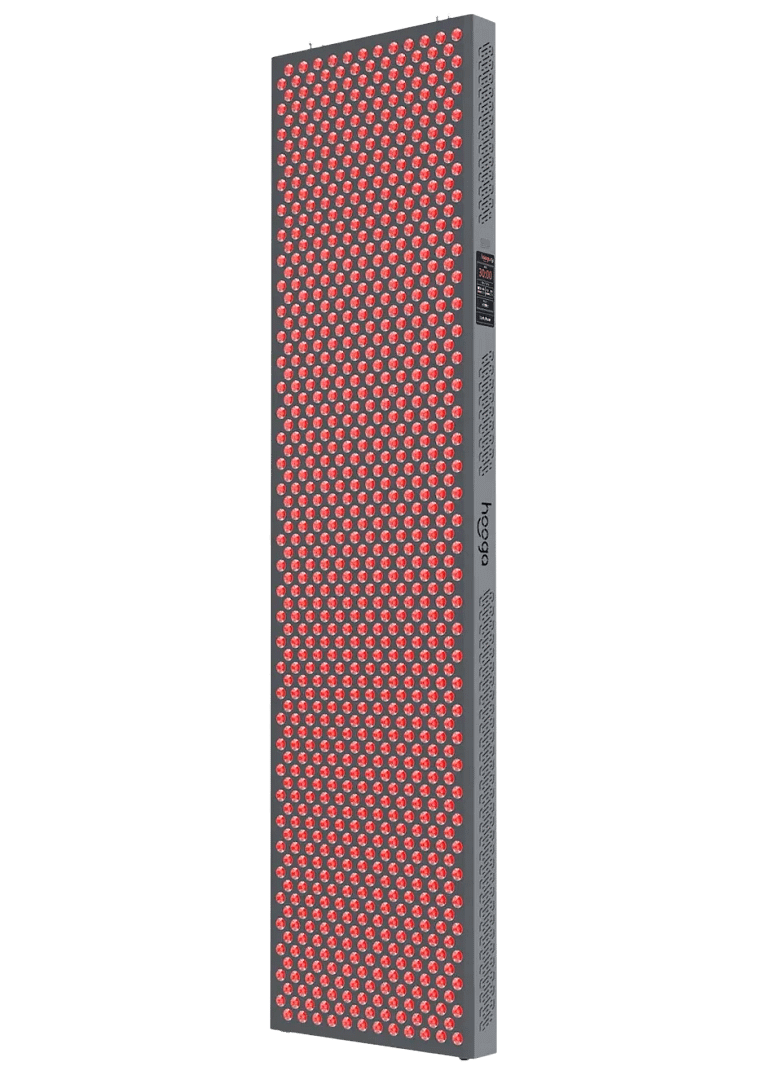
Panels are larger devices primarily designed for the body, but they can absolutely be used for the face. You sit or stand in front of one at the recommended distance and let it do its work.
The advantage of a panel is power. Professional grade panels tend to deliver more light energy than most face masks, which can translate to stronger results. The tradeoff is that they are less convenient, require more setup and are not specifically designed for facial contours.
For someone who already owns a panel for other purposes, using it for the face as well makes complete sense.
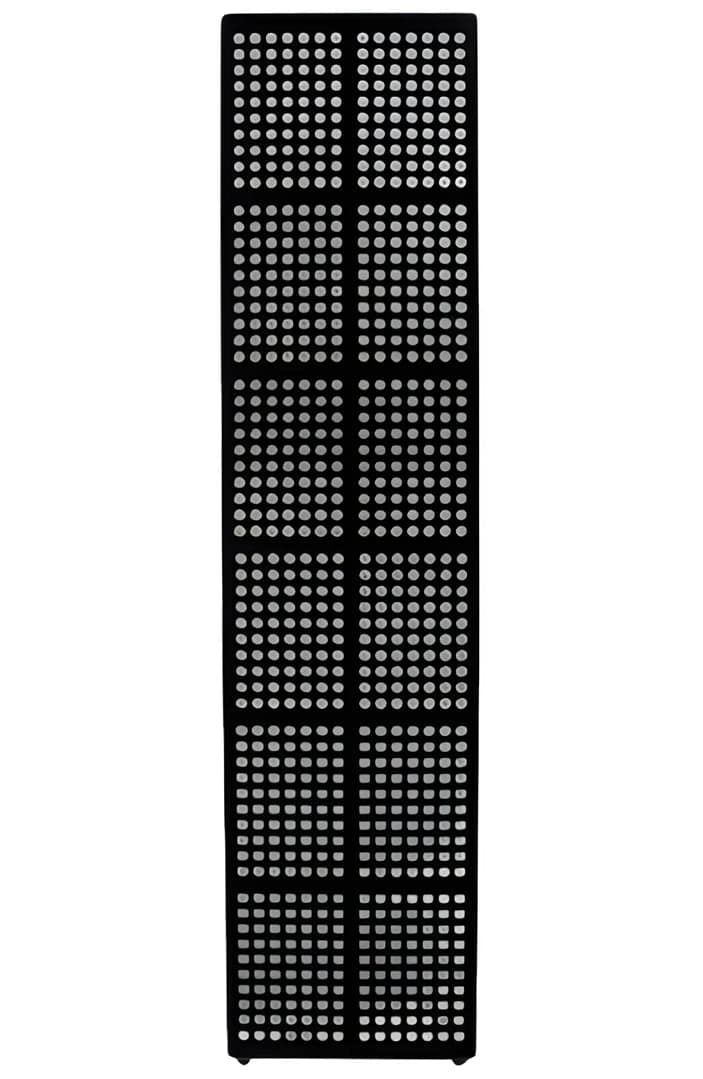
🥇Celler8 Full-Body Panel
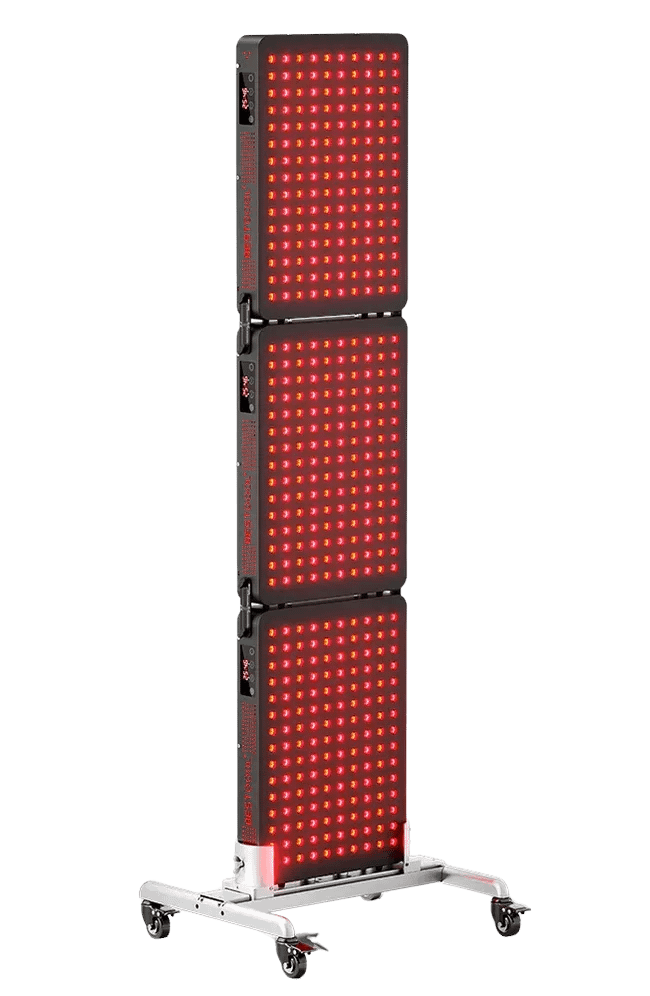
🥉BestQool BQ 150
Limitations and Side Effects
Red light therapy for skin is one of the safest treatments you can do at home. There are no chemicals, no heat, no recovery time. But there are things worth knowing before you start.
It only works if you stay consistent.
This is the biggest limitation and the one most people run into. Red light therapy does not deliver dramatic results after a handful of sessions. The improvements build gradually over weeks and months. If you use it sporadically, you will not see much.
It is not a replacement for a skincare routine.
Red light therapy for skin care works best when it is part of a broader approach. It will not undo years of sun damage on its own. You still need to take care of your skin the old fashioned way.
It is not for everyone.
Who should consult a doctor before using it:
- People with active skin conditions like rosacea flares, active acne breakouts or open wounds in the treatment area
- People taking photosensitizing medications, including certain antibiotics, retinoids or acne drugs like Accutane
- People with a history of skin cancer or active skin cancer
- People with lupus or other light sensitive conditions
- Pregnant women, due to limited research on safety during pregnancy
Common side effects:
Most people experience none. A small number notice mild temporary redness or warmth in the treated area immediately after a session. This usually disappears within an hour. If redness persists or you experience any discomfort, reduce session frequency or distance from the device.
Final Thoughts
Red light therapy for skin care is not a trend. It has been studied in dermatology for decades, the research behind it is some of the most consistent in non invasive aesthetics, and the results it produces are real and measurable.
What makes it different from most things marketed as anti aging solutions is that it actually works on the inside. It does not fill lines or paralyze muscles or sand the surface down. It goes into the tissue and gives your cells what they need to do their job better. That is a fundamentally different approach, and for a lot of people it is a more appealing one.
It is also one of the few things you can do at home, in 15 minutes, a few times a week, that has genuine clinical backing. No appointment, no recovery time, no side effects for most people.
The catch, as always, is time. This is not something you try for two weeks and evaluate. You give it three months of consistent use and then you look in the mirror. That is when you will see what it has done.
Start before you think you need to. The earlier you begin, the more there is to preserve.
| Image | Product | Features | Price |
|
Our Pick
1
 |
Product Name |
Product Features |
Scientific Evidence

ABOUT THE AUTHOR
Marco Gentile
Marco Gentile (CHC, CMT, CTP, CETS) is a seasoned wellness professional with over 10 years of experience using red light therapy to help clients achieve optimal health and longevity. Currently, he works at the Burke Williams Spa – Health, Wellness & Fitness Center in L.A., where he continues to inspire and support individuals on their wellness journeys.
Related Articles

The Best Red-Light Therapy Neck Devices of 2026. Complete Buyer’s Guide

The Best Red-Light Therapy Panels: What’s the Best Full-Body Panel of 2026?

The Best Red-Light Therapy Hats of 2026. Complete Buyer’s Guide

The Best Red-Light Therapy Mats of 2026. Complete Buyer’s Guide

The Best Red-Light Therapy Masks for Skin Care of 2026. Complete Buyer’s Guide

The Best Red-Light Therapy Wands & Torches of 2026. Complete Buyer’s Guide
