
Red Light Therapy for Hair Loss: How to Use LED Therapy to Enhance Hair Growth

You notice it first in the shower. A little more hair than usual circling the drain. Then in the mirror, your hairline looks like it’s slowly receding. You tell yourself it’s probably nothing. But deep down, you start searching for answers.
If that sounds familiar, you’re not alone. Hair loss affects millions of people, and the emotional weight of it is real, even if nobody likes to talk about it much.
The good news? There are science-backed solutions beyond the usual shampoos and supplements. And one of the most interesting ones doesn’t come in a bottle at all.
So what is it? It’s called red light therapy, and chances are you’ve never seriously considered it as a hair loss solution. But the science behind it has been building for decades, it’s FDA-cleared, and it’s becoming more accessible every year.
In this article, we’re breaking down exactly how it works, who it’s for, and what you can realistically expect.
What Is Red Light Therapy?
The idea behind red light therapy is simpler than it sounds. Certain colors of light, when directed at your skin at the right intensity, can actually influence what happens inside your cells.
Red light specifically has been shown to give cells an energy boost, which in the context of hair loss means your scalp gets more of what it needs to keep follicles active and productive.
It all started by accident. In 1967, a Hungarian scientist named Endre Mester was studying whether laser light could cause cancer in mice. His laser turned out to be far weaker than intended, so it didn’t cause cancer. What it did instead was make the shaved areas on the mice grow hair back noticeably faster than the untreated ones.
That unexpected finding started decades of research into what low level red light could do for the human body.
Read: The 21 Benefits of Red Light Therapy Debunked
That research eventually convinced the FDA, the US government agency that decides which medical treatments are safe enough to use on people, to formally clear the first red light therapy device for hair loss in 2007, deeming it “safe to use” for the general public.
How the Light Affects the Skin
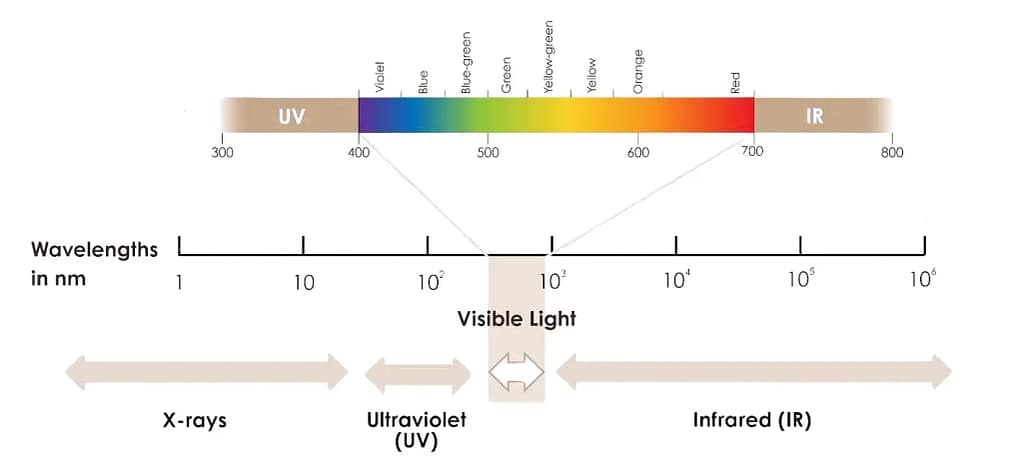
Light exists on a spectrum. What we see as different colors are actually different types of light waves, each with a different frequency. Scientists measure these frequencies in nanometers (nm), which is simply a unit of measurement for the size of a light wave, the same way we use centimeters to measure length.
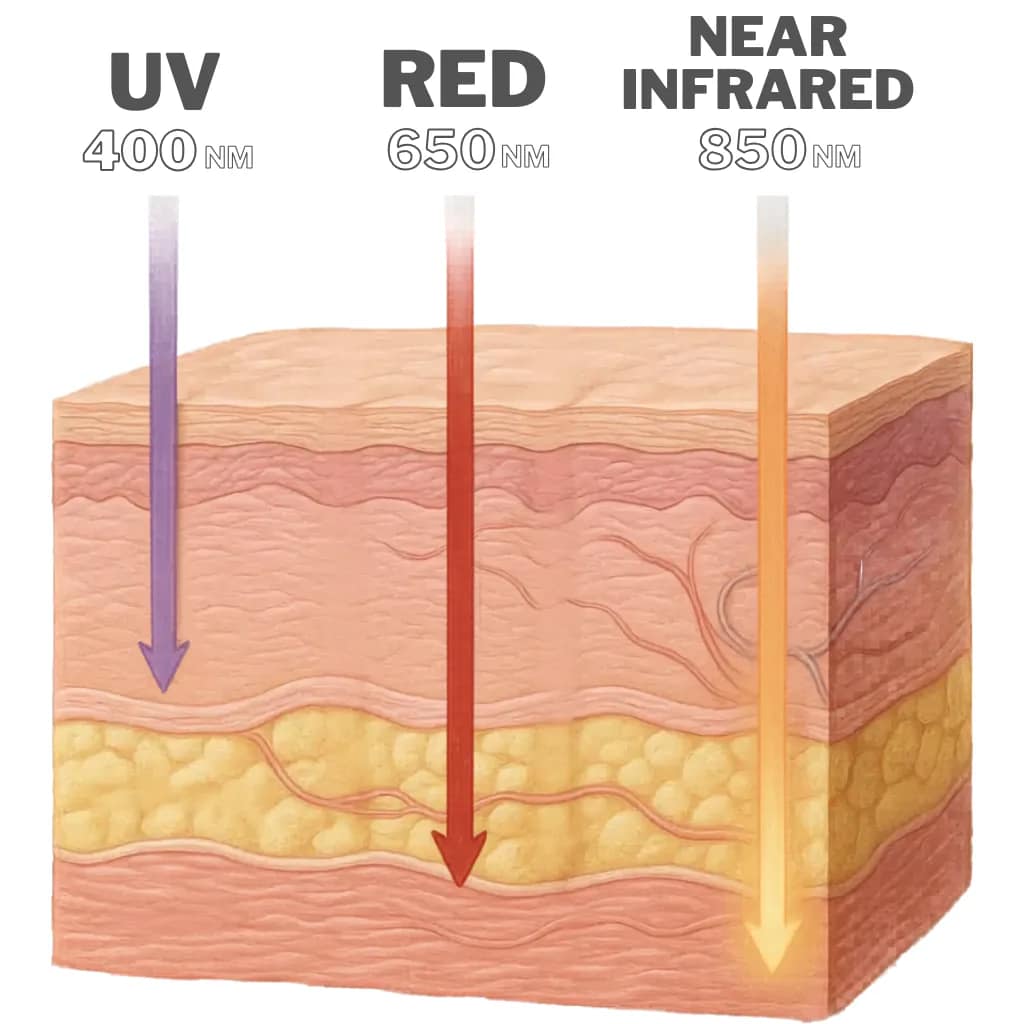
Different wavelengths of light behave very differently when they hit your skin. UV light, which sits at the shortest wavelengths on the spectrum, barely penetrates the surface. It is mostly absorbed by the outermost layer of skin, which is why it can cause sunburn but does not go much deeper.
Red light, sitting further along the spectrum at around 630 to 670 nm, penetrates more meaningfully into the skin and deep enough to reach the hair follicles, which is exactly where we need it.
Near-infrared light, at around 810 to 850 nm, goes even deeper. It is completely invisible to the human eye, but it reaches further into the tissue than red light does, which makes it useful for targeting structures that sit lower in the scalp.
The image above illustrates this clearly. If you want to use red light therapy for hair loss, the wavelengths that matter most for you are red and near-infrared, as they are the only ones that actually reach the follicles rather than stopping at the skin surface.
Is it Backed by Science?
Hair follicles go through cycles. There is a growth phase, a transition phase, and a rest phase. In people experiencing hair loss, follicles spend less and less time in the growth phase and more time resting, which means thinner hair and eventually no hair at all.
Red light therapy works by interfering with that process in three specific ways.
More energy to Follice
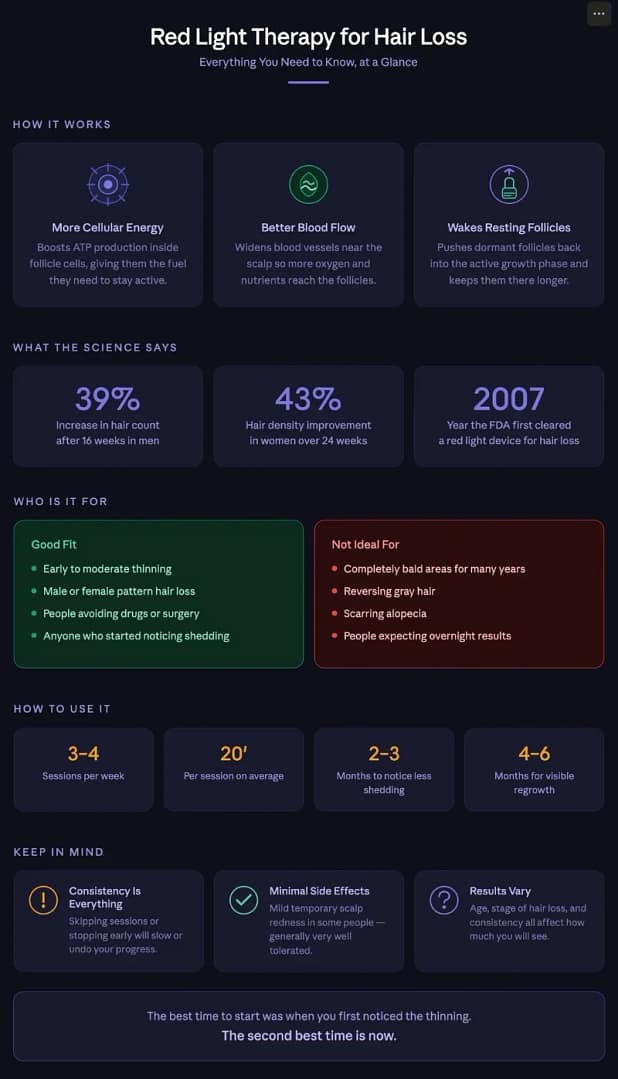
Every cell in your body runs on a molecule called ATP, which is basically cellular fuel. Hair follicles need a lot of it to do their job. Red light is absorbed by the mitochondria inside follicle cells, which are the tiny structures that produce energy, and causes them to produce more ATP.
More fuel means follicles can stay in the growth phase longer.
A peer reviewed study on human hair follicle cells confirmed that red light directly boosts ATP production and stimulates cell growth. In a clinical trial on men with pattern hair loss, this translated into a 39% increase in hair count after 16 weeks.
Improved Blood Flow to the Scalp
Red light causes blood vessels near the skin to widen, which means more blood, oxygen, and nutrients reach the follicles.
A clinical study on women with pattern hair loss confirmed that this mechanism pushes dormant follicles back into the active growth phase, with hair density improvements of up to 43% recorded over 24 weeks.

Wakes up Resting Follicles
Follicles that have gone dormant are not necessarily dead. Red light has been shown to push them back into the active growth phase and delay the transition into the resting phase.
A peer reviewed study using actual human hair follicles taken from hair transplant patients found that red light significantly prolonged the growth phase and stimulated follicle proliferation in tissue samples.
Who Is It Best For?
Red light therapy works best for people who are in the early stages of hair loss. The reason is straightforward: it works by stimulating follicles that are still there but underperforming. If a follicle is gone, there is nothing left to stimulate.
The most studied condition is androgenetic alopecia, which is the medical term for male and female pattern hair loss. Multiple peer reviewed studies confirm it as the condition with the most clinical evidence supporting red light therapy.
Red light therapy is a good fit for you if you are:
- A man or woman noticing early to moderate thinning
- Experiencing a slowly receding hairline
- Looking for a non drug, non invasive option to add to your routine
- Someone who has not responded well to other treatments
It is unlikely to help if you:
- Have areas of the scalp that have been completely bald for many years
- Are hoping to reverse gray hair. Red light does not affect pigmentation
How to Use It
Consistency matters more than intensity. The clinical study that recorded a 39% increase in hair count achieved such a result by scheduling sessions every other day for 16 weeks, each lasting 25 minutes. Most protocols land in a similar range: 3 to 4 sessions per week, 15 to 25 minutes each, depending on the power of your device. A good starting point for most people is 20 minutes per session.
Weekly schedule:
| Mon | Tue | Wed | Thu | Fri | Sat | Sun | |
|---|---|---|---|---|---|---|---|
| Session | ✓ | ✓ | ✓ | ✓ | |||
| Duration | 20 min | 20 min | 20 min | 20 min |
What to expect over time:
- Month 1 to 2: Less shedding when washing or brushing
- Month 3 to 4: The scalp starts to look less thin in certain areas
- Month 4 to 6: You may notice the first signs of visible regrowth
- Month 6+: You’ll notice a fuller, denser results with continued use
A few rules to follow:
- Do not skip days thinking you will double up the next day
- More sessions per week does not mean faster results
- If your scalp feels irritated, take an extra rest day
- Take monthly photos in the same lighting to track progress. Changes are gradual and easy to miss
Red light therapy works best as a long term habit rather than a short course of treatment. This is true for most hair loss solutions, not just this one. Hair is a slow biological process, and the results you build over months are worth protecting by keeping up with your sessions. The effort you put in consistently over time is what makes the difference
What Devices Can You Use?
There are a few different ways to deliver red light therapy to your scalp, and each comes with its own tradeoffs.
Red Light Therapy Hats
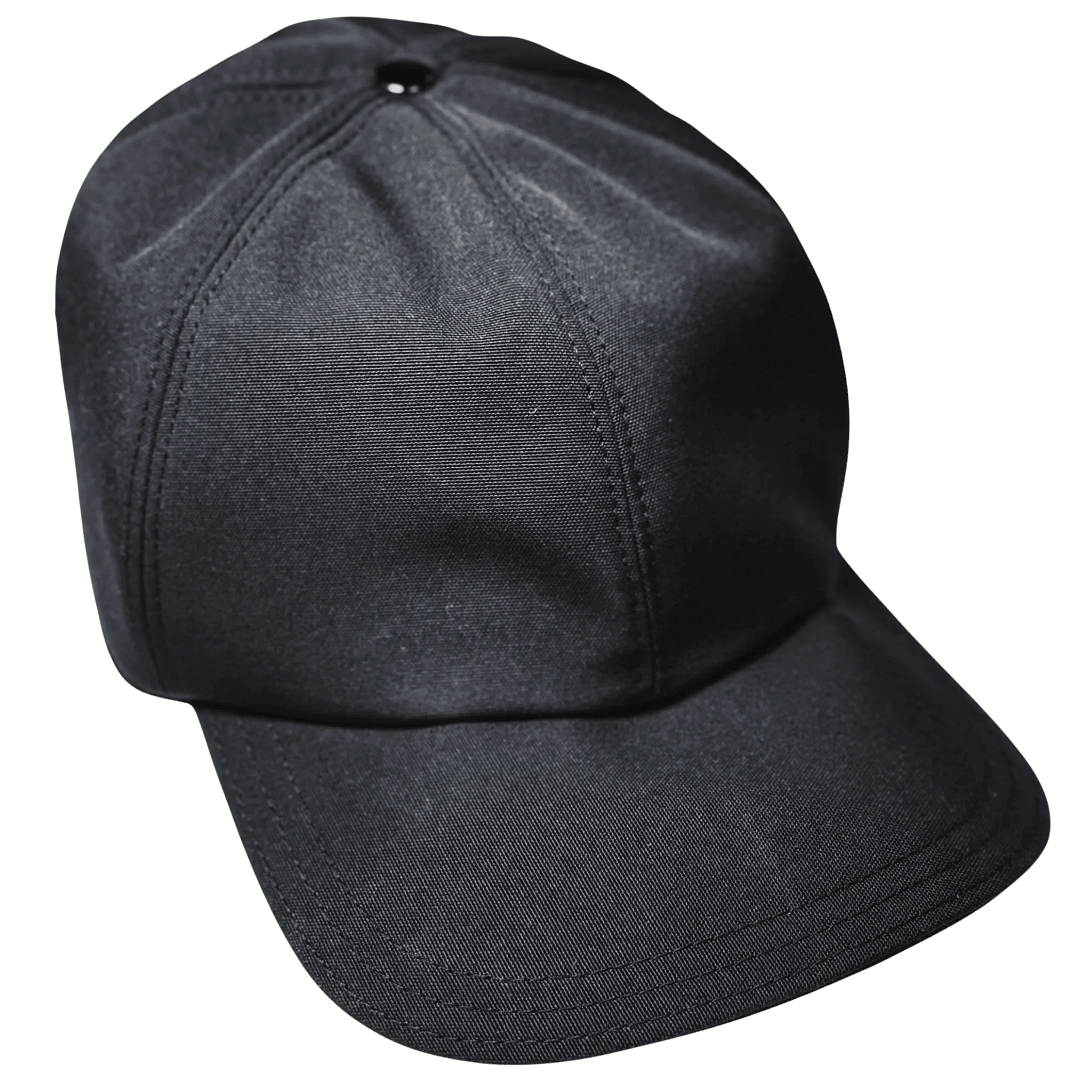
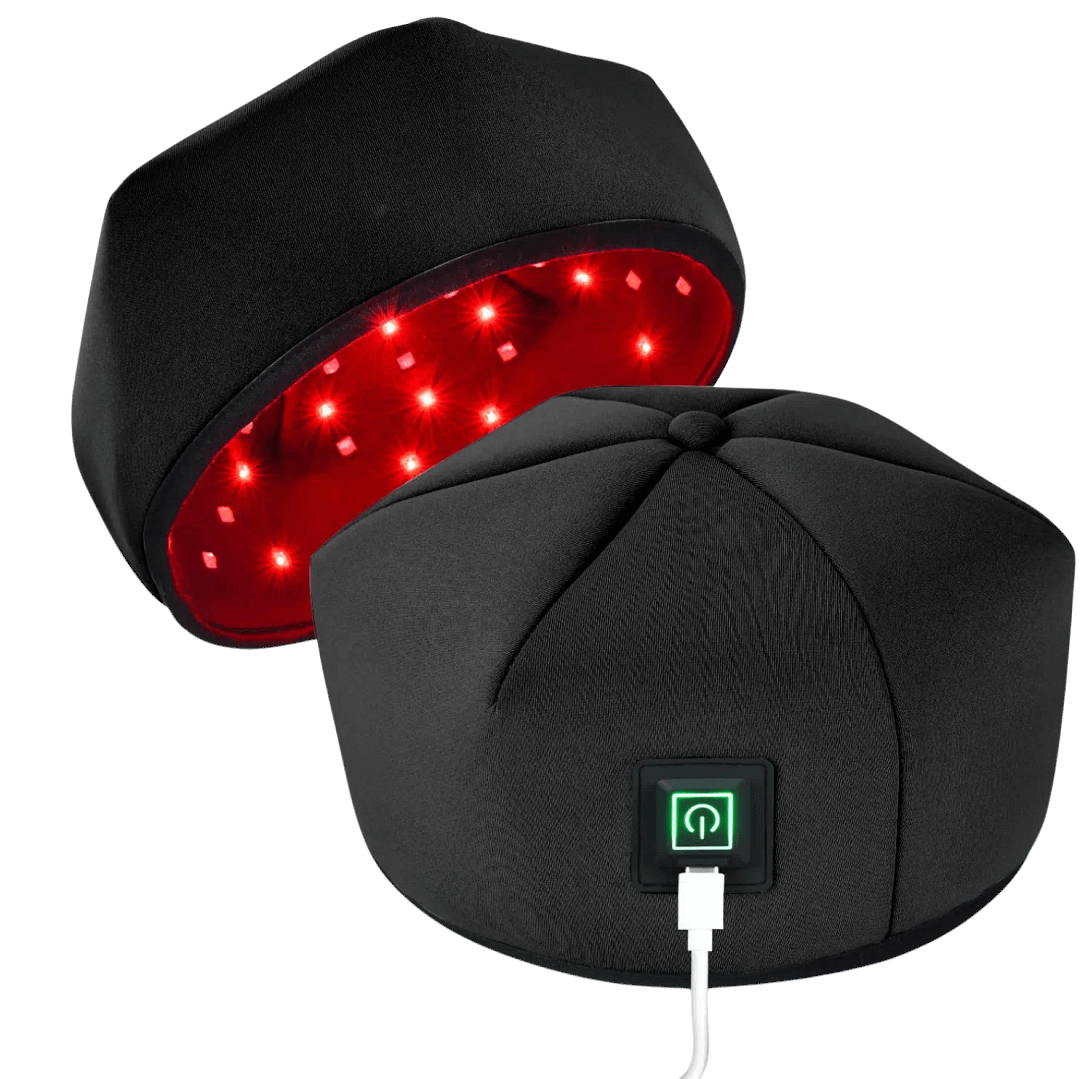
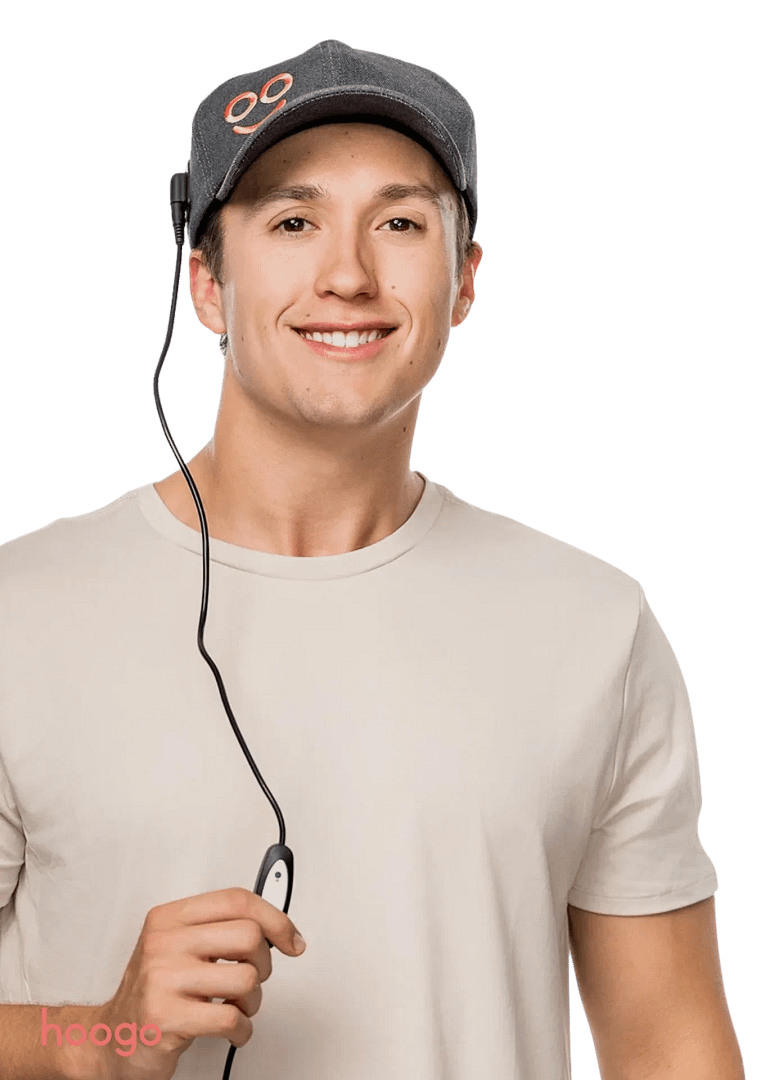
The most practical option to use red light therapy for hair loss. You put one on, and it covers the entire area evenly without any effort on your part. The light is delivered directly to the scalp from above, which is exactly where you need it.
For hair loss specifically, this is the most straightforward choice: no setup, no positioning, no guesswork.
Red Light Therapy Panels
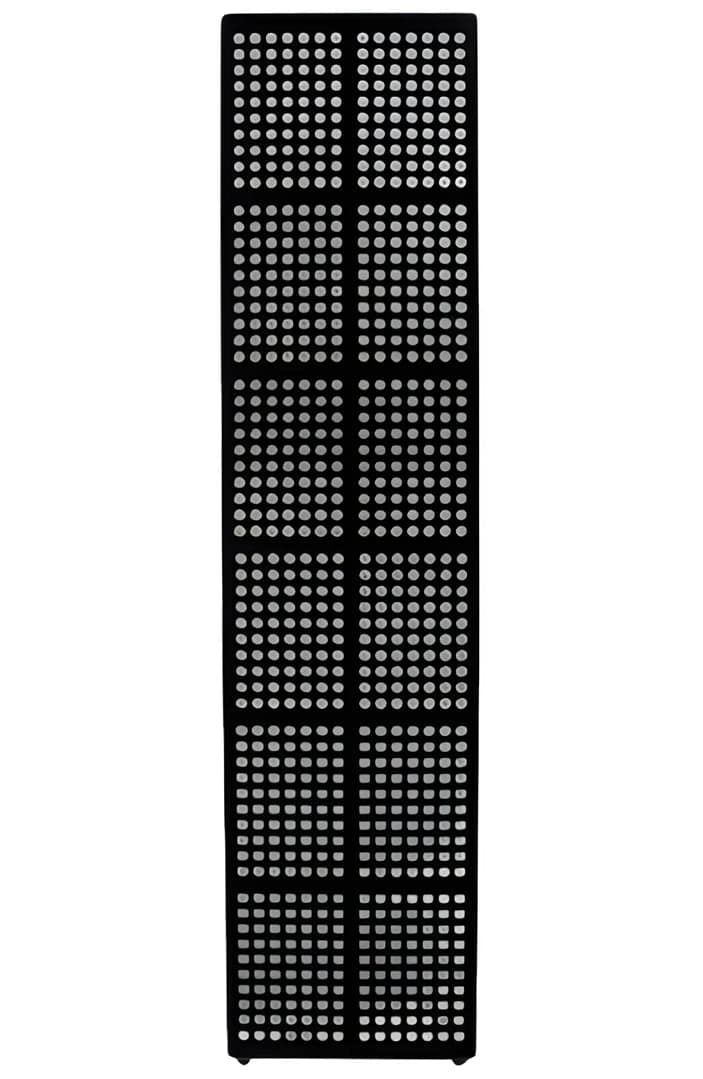
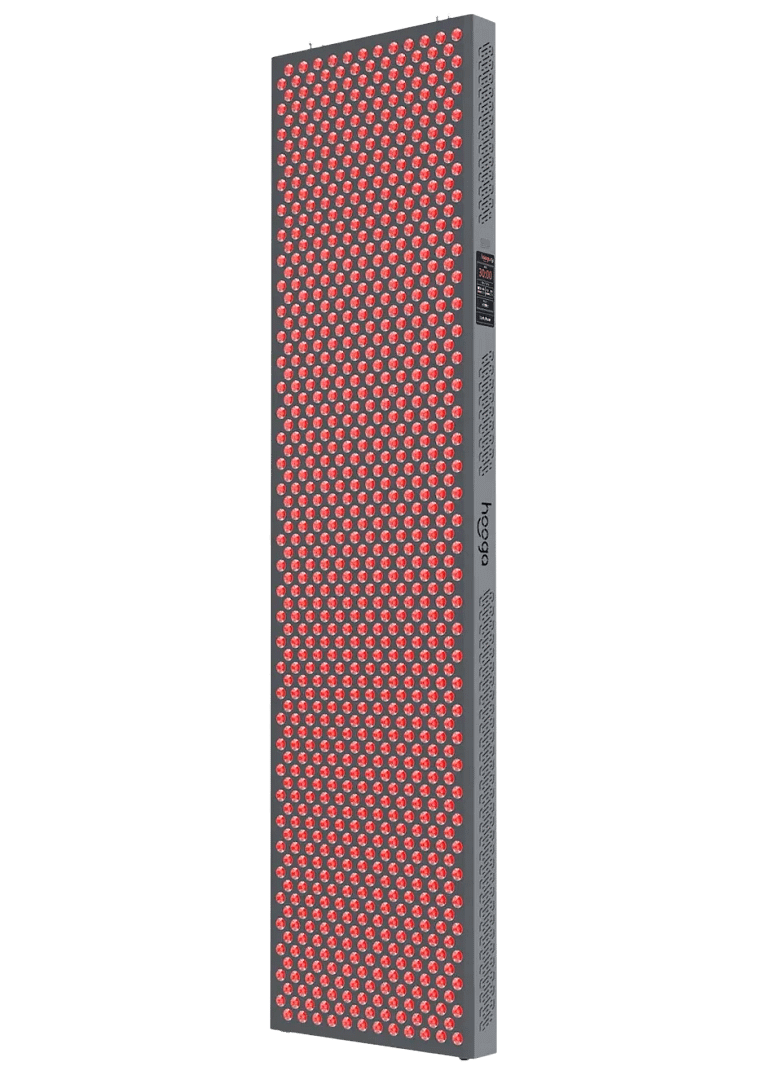
Panels are powerful and versatile devices, but they were not specifically designed with the scalp in mind. To treat your hair loss with a panel, you would need to position yourself directly underneath it, lying down with the panel above your head. It works, but it requires a bit of planning compared to simply putting on a hat.
🥇Celler8 Full-Body Panel
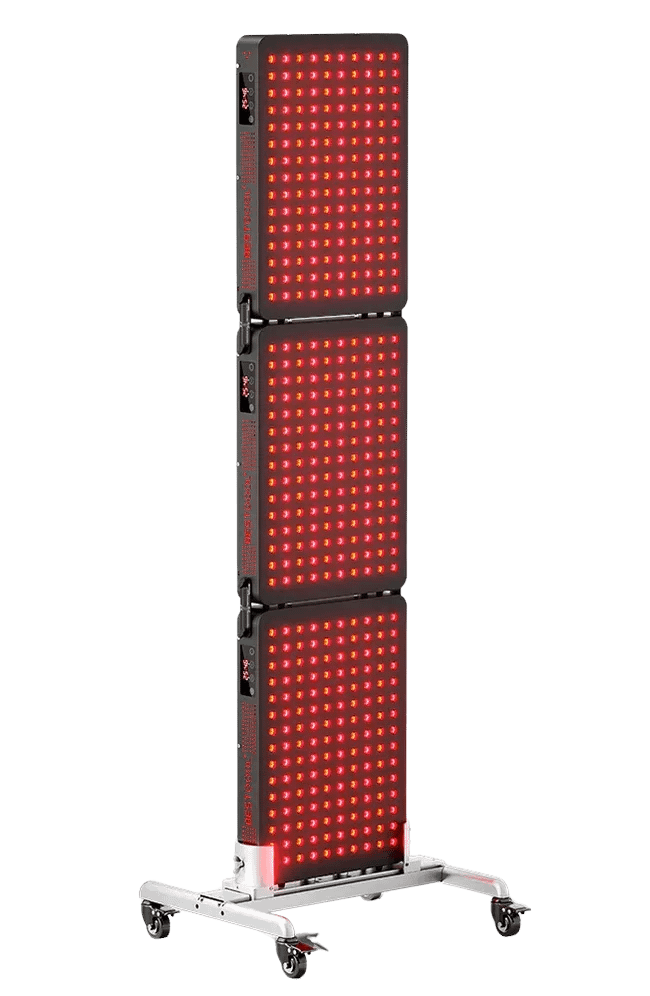
🥉BestQool BQ 150
Red Light Therapy Wands & Torches
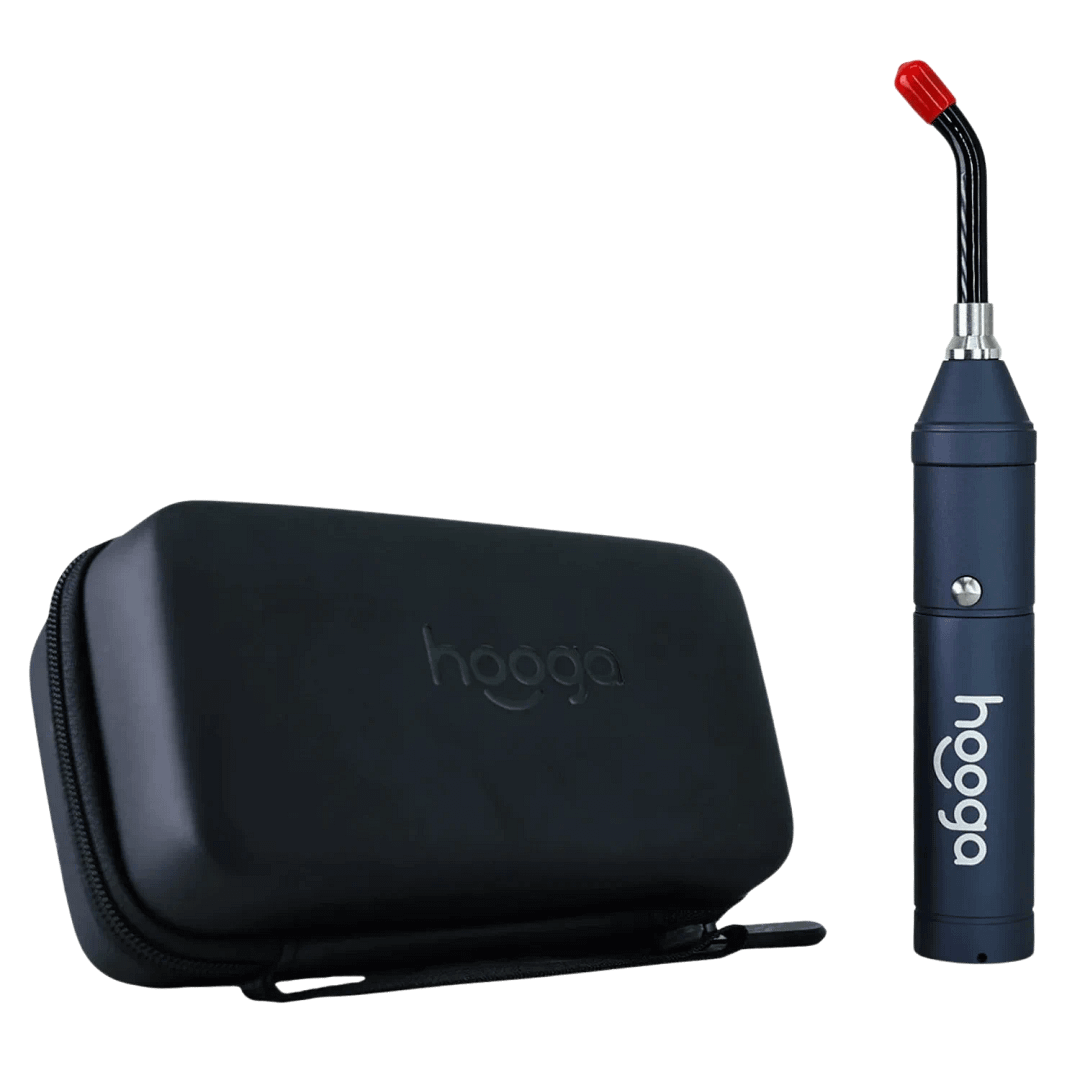
Wands and torches are handheld devices that you move across whatever area you want to treat. They are flexible and can reach any part of the body, including the scalp.
The downside is that covering the entire scalp section by section takes time and attention, and it is harder to ensure you are treating every area evenly every single session.
Read: The Best Red Light Therapy Wands & Torches for Hair Loss
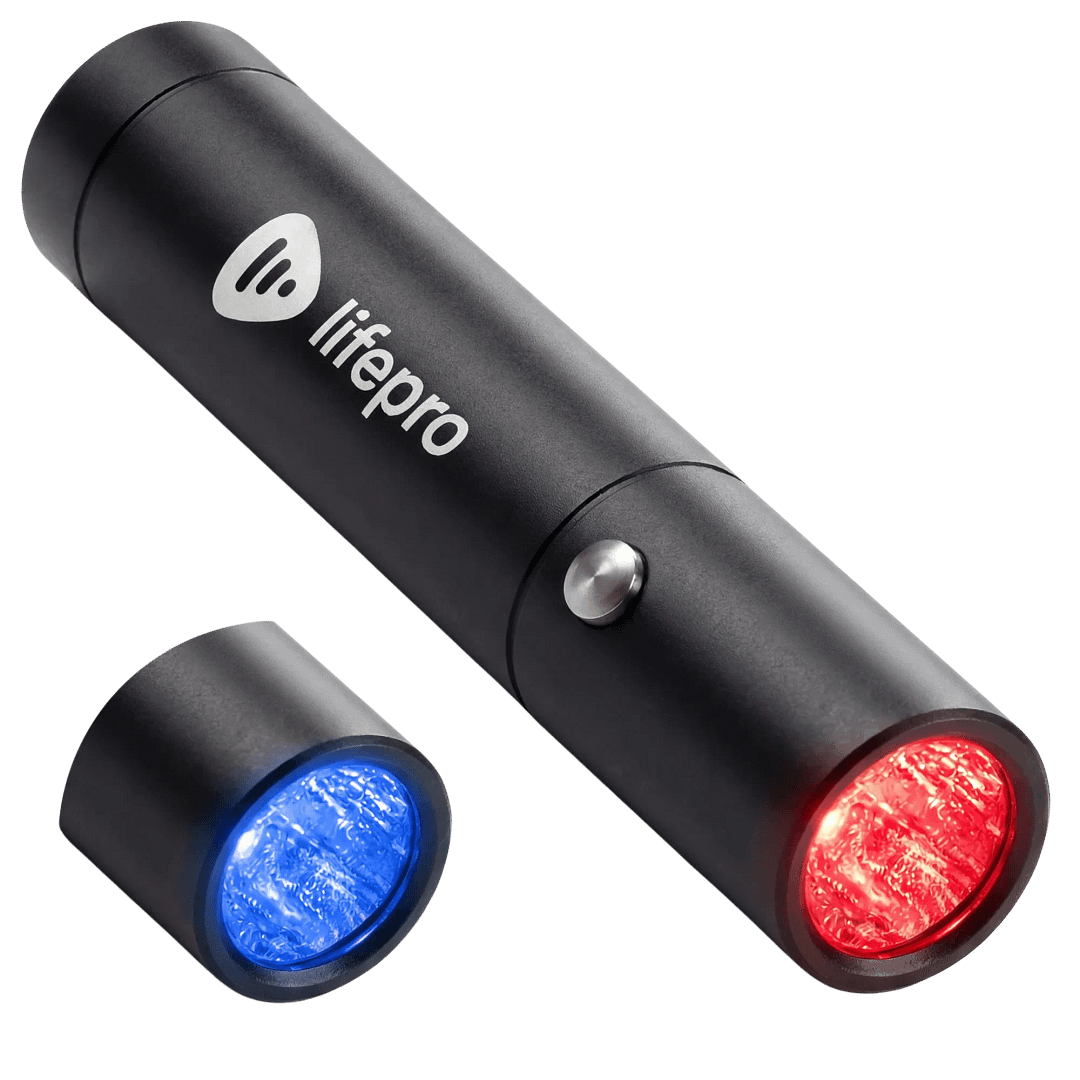
🥇LifePro RLT Torch
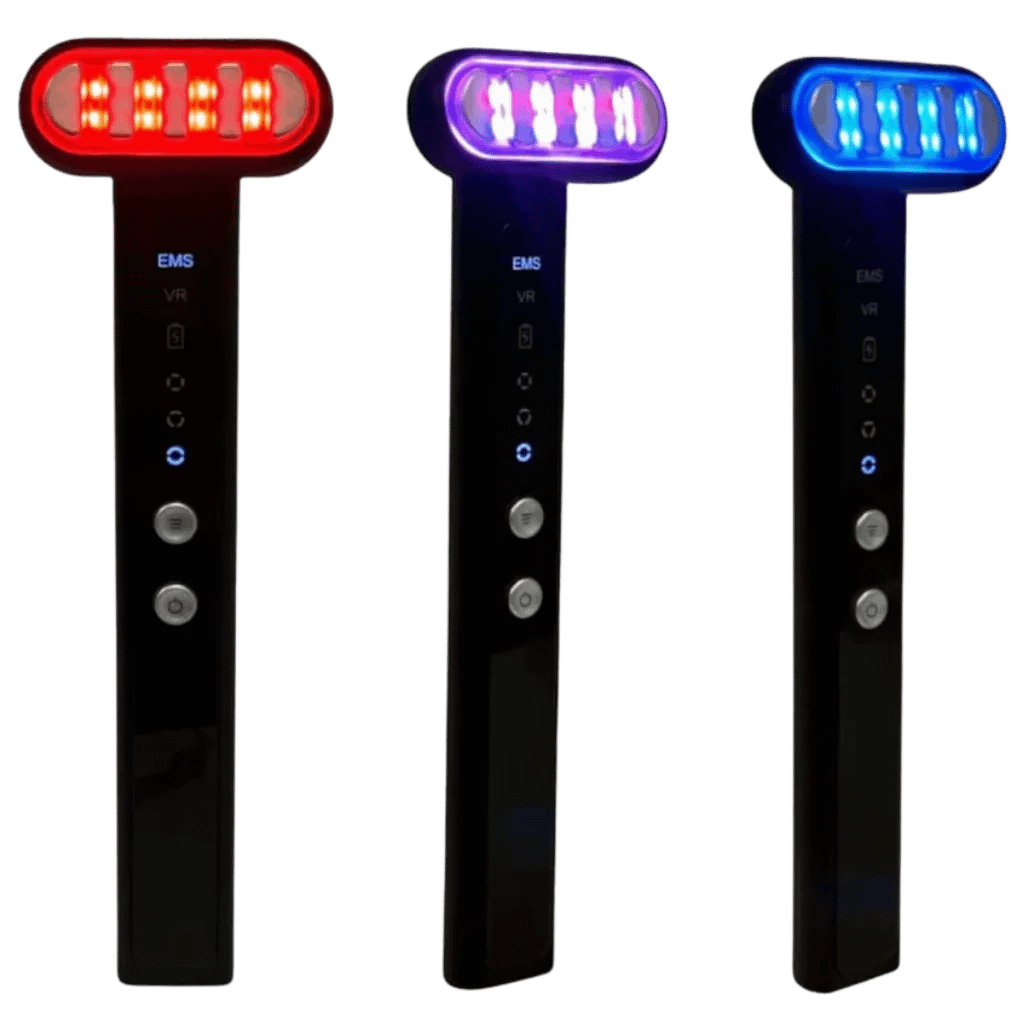
🥈Therasage TheraSculpt
Limitations & Side Effects
Red light therapy is well tolerated by most people, but there are a few things worth knowing before you start.
- Some people experience mild scalp redness after sessions. This is temporary and usually resolves within an hour.
- Results vary from person to person. Age, the stage of hair loss, and how consistently you use the device all play a role.
- It works best on follicles that are still active. Very advanced hair loss may see limited benefit.
Wrapping Up
Hair loss is one of those things that is easy to ignore until it becomes hard to ignore. Using red light therapy for hair loss will not reverse years of thinning overnight, but the science behind it is real, the side effects are minimal, and for most people experiencing early to moderate hair loss it is one of the more sensible options available today.
It is non invasive, drug free, and can be done at home in the time it takes to drink your morning coffee. Stay consistent, and give it at least three months before drawing any conclusions.
If you are unsure whether it is right for your specific situation, a dermatologist or trichologist can point you in the right direction.
The best time to start was when you first noticed the thinning. The second best time is now.
| Image | Product | Features | Price |
|
Our Pick
1
 |
Product Name |
Product Features |
Scientific Evidence

ABOUT THE AUTHOR
Marco Gentile
Marco Gentile (CHC, CMT, CTP, CETS) is a seasoned wellness professional with over 10 years of experience using red light therapy to help clients achieve optimal health and longevity. Currently, he works at the Burke Williams Spa – Health, Wellness & Fitness Center in L.A., where he continues to inspire and support individuals on their wellness journeys.
Related Articles

The Best Red-Light Therapy Mats of 2026. Complete Buyer’s Guide

The Best Red-Light Therapy Neck Devices of 2026. Complete Buyer’s Guide

The Best Red-Light Therapy Wands & Torches of 2026. Complete Buyer’s Guide

The Best Red-Light Therapy Hats of 2026. Complete Buyer’s Guide

The Best Red-Light Therapy Panels: What’s the Best Full-Body Panel of 2026?

The Best Red-Light Therapy Belts of 2026. Complete Buyer’s Guide
