Resona Vibe Review: Can a “Pocket” PEMF Device Replace My Mat?

Marco Gentile Author Box

Marco Gentile, CHC, CMT, CTP, CETS · Spa Director at Burke Williams, Los Angeles
Why trust this review

Resona Vibe PEMF Device: THE SHORT VERSION

3.5out of 5The Resona Vibe is a pocket-sized PEMF device with 59 preset programs, a wide frequency range and a low price. The warranty is short, but if you want PEMF on the go, this one is easy to recommend.

Right for

  • You want a true pocket device you can take anywhere and use hands-free, in your pocket or around your neck
  • You want a large library of programs, with a protocol for almost any condition you’re dealing with

Pros and cons

What I liked

  • Versatility & Portability
  • Preset Programs
  • Price

What I didn’t

  • Short Warranty

Price range:$250–$300

When you buy through links on this page I may earn a commission, at no extra cost to you. Read full disclosure.
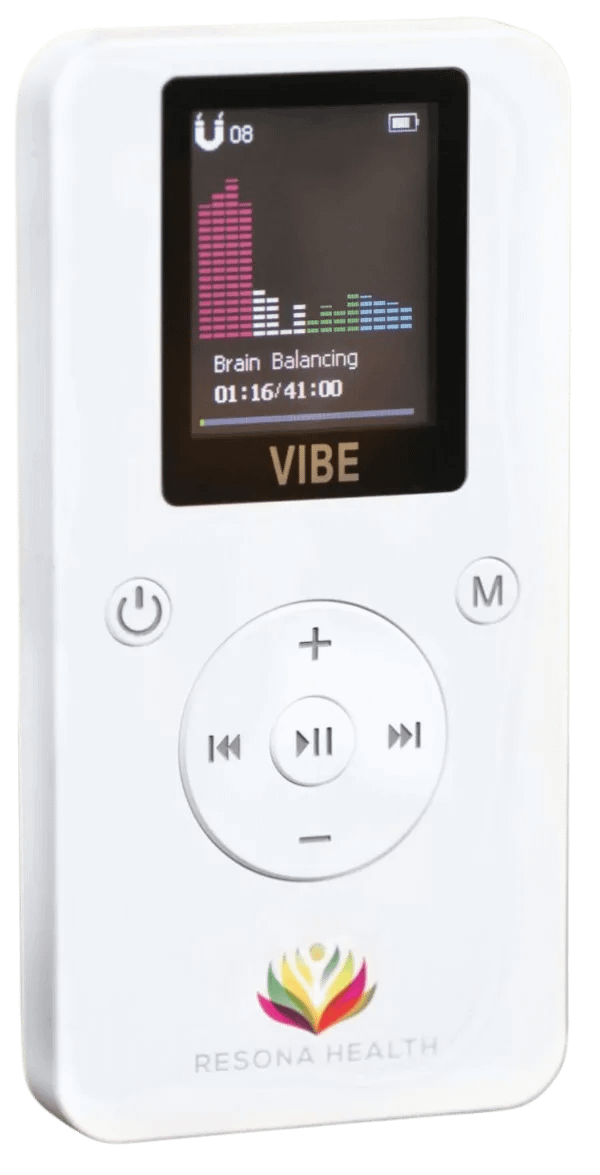
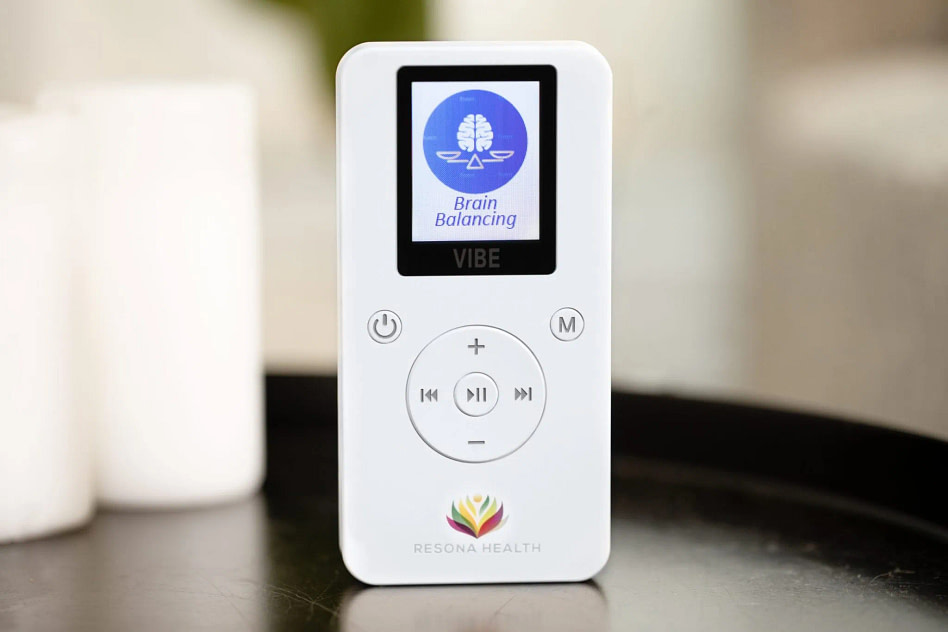
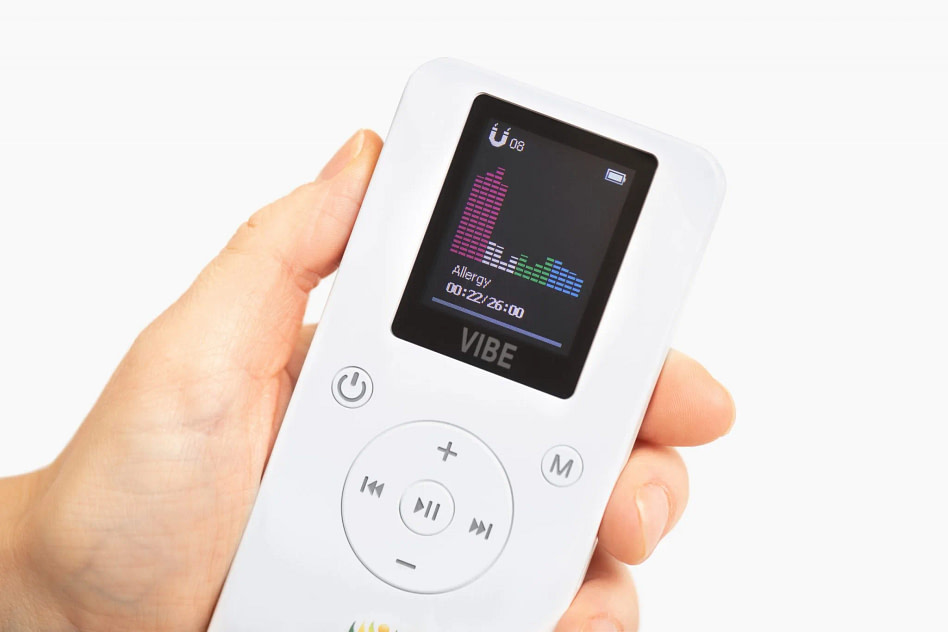
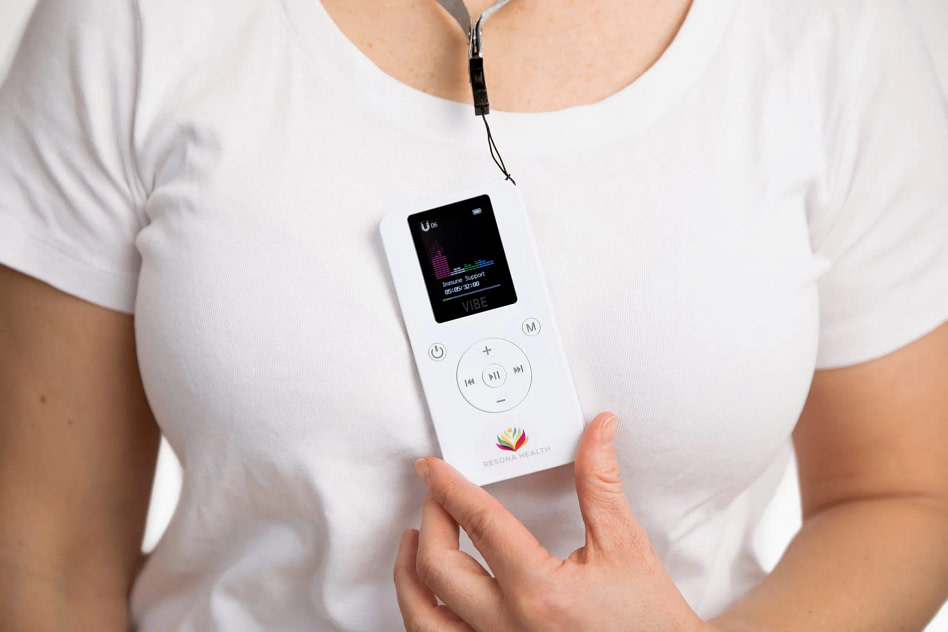
Welcome to my Resona Vibe review. This is a wearable PEMF device, and the whole idea behind it is convenience. You slip it into your shirt or jeans pocket, or hang it around your neck with the lanyard that comes in the box. Whether you’re cooking, cleaning, watching TV, working at your computer, reading or out for a walk, it keeps running and stays out of the way.

The Vibe is a true pocket PEMF device, and I can’t think of another one like it. The list of programs is long and the PEMF specs are better than I expected from something this size. Whether a unit this small can really do the job is another question. One thing worth knowing early: it doesn’t need to touch your skin, so you can run it right over your clothes.
Resona Vibe Specs and Features

Reading the Spec Sheet

1-1000HzPEMF Frequency Range

PEMF frequency is how many times per second the magnetic field pulses, and it’s counted in hertz. The Vibe goes from 1 to 1000 Hz. That’s an extremely high range for a PEMF device, and it covers every treatment and condition there is.

9GaussPEMF Intensity

PEMF intensity is the strength of the magnetic field the device puts out, and it’s measured in gauss. The Vibe puts out up to 9 Gauss. That puts it in the medium-low range, which is where treatment starts to get more effective.

Buyer protection

30-Day Return Policy

1-Year Warranty

Size & Weight

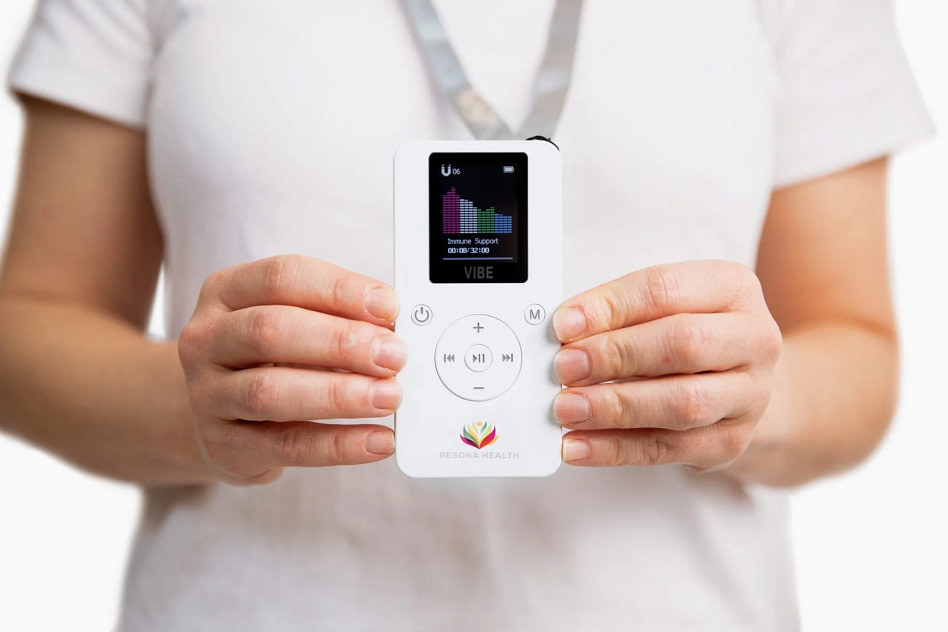
Vibe4.7 x 2.3 in0.16 lbs
Vibe12 x 5.9 cm0.075 kg
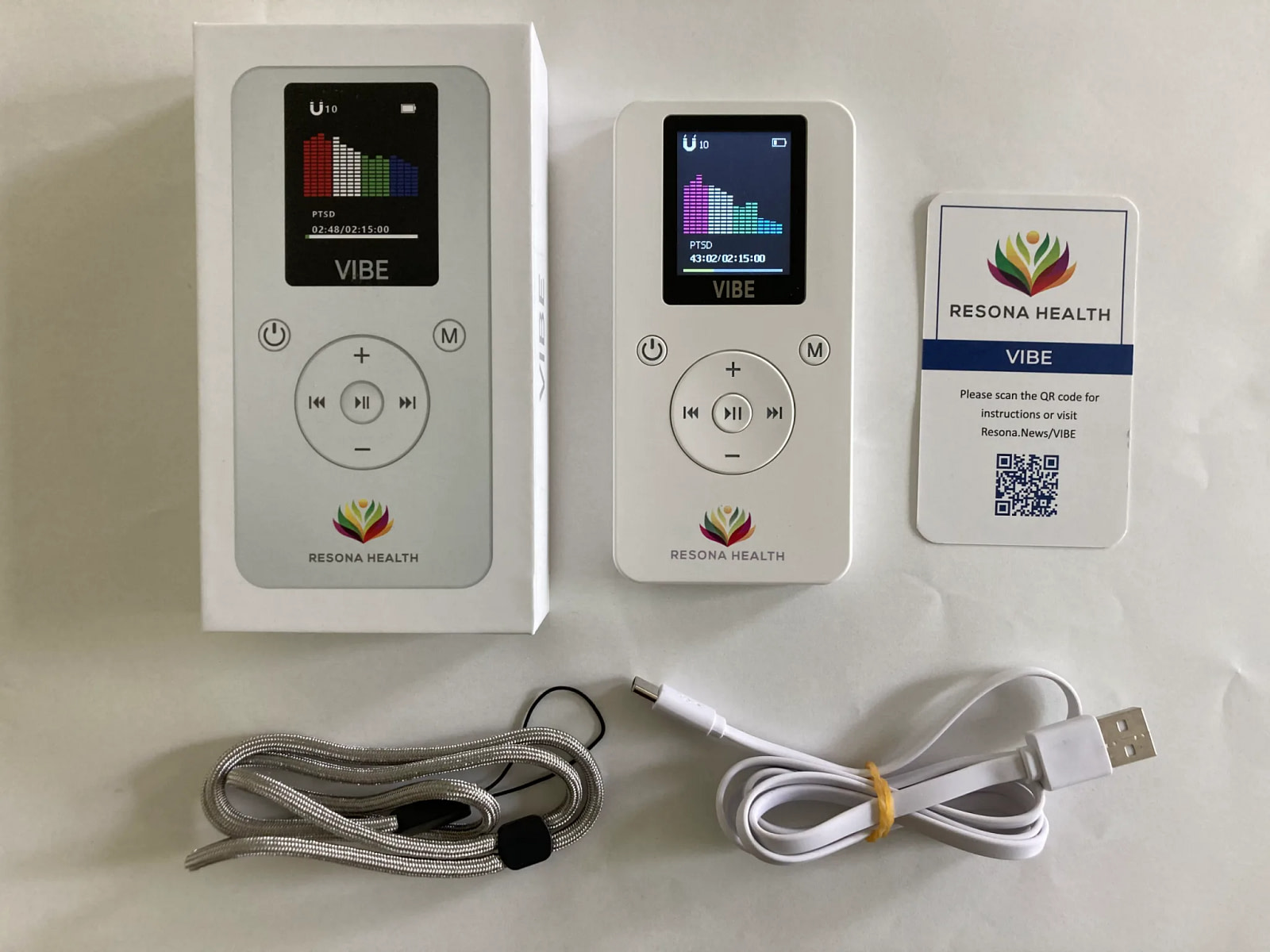
Resona Vibe Review kit with device, USB charger, lanyard, and product box

Price range

$250–$300

Check Latest Price at Resona

What It’s Like to Own the Resona Vibe

Everything else on this page can be measured. What follows can’t, and none of it settles whether the Resona Vibe PEMF Device is a good device. What it might settle is whether you’re still using it a year from now, and that’s the question worth asking.

Portability

Maximum

Designed for portability. Charged via USB, you can put it in any pocket and take it with you anywhere.

Versatility

Very High

It’s a PEMF only device, but you get so many programs that you never run out of ways to use it.
Price range

$250–$300

Check Latest Price at Resona

Resona Vibe Functions and Controls

Rechargeable Battery

One of my favorite things about the Resona Vibe is the rechargeable battery. You plug it into any USB port to charge it, and then you’re free to use it wherever you want. The battery lasts up to 5 hours at full power and 8 hours at half power, and a full recharge takes about 2 hours.
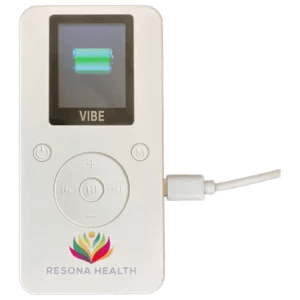
Resona Vibe connected to USB cable while recharging

What Settings Does the Resona Vibe Have?

The Resona Vibe comes with 59 preset programs built in, and Resona calls them protocols. Whatever you’re dealing with, there’s probably one for it, from acne to arthritis, from back pain to PTSD. The list is too long to show here, but you can check the full set here.

Resona also adds 70 extra Brain Wave Expansion protocols on top of those, at no added cost. So the real number of programs on the device is a lot higher than the 59 they advertise.

Each protocol runs anywhere from about 30 minutes to over two hours. Resona says you should let it run from start to finish rather than cutting it short. The reason is that each one moves through a sequence of frequency pairs instead of sitting on a single frequency.

Frequency control

Via PReset Programs

You can select your desired frequency by selecting any preset program. The frequency range is very wide, so whatever you want to use PEMF for, you are covered.

Intensity control

Fixed

The intensity is fixed a 9 Gauss and there is no way to adjust it.

Price range

$250–$300

Check Latest Price at Resona

Resona Vibe Accessories

You probably don’t need a carry bag for your Resona Vibe, but a small pouch would have been a nice touch for a device this pocketable. What you do get is the lanyard, and that’s the accessory that matters most. Hanging the Vibe around your neck is one of the easiest ways to use it hands-free through the day. You also get the USB charging cable and the manual. Across the Resona Vibe reviews I’ve put together, accessories are the one area where these wearables stay minimal, and the Vibe is no different.

Resona Warranty and Returns

Warranty

1 Year

The warranty only runs for one year, which feels a bit short next to what many competitors offer. But they make it easy, so unless you have been abusive with the device and damaged it, they’ll accept the request.

Returns

30 Days

The Resona Vibe comes with a 30-day money-back guarantee, which is a reasonable window to try the device and decide if it’s right for you. Resona counts those 30 days from the day the device arrives, not from the day you order it.

HSA and FSA

Not Eligible

HSA/FSA payment is not available, so you cannot use your health savings or flexible spending account funds on this product, unfortunately.

Is the Resona Vibe PEMF Wearable Worth it?

3.5out of 5

My FInal verdict

The Resona Vibe is an odd one, in a good way. It’s a pocket-sized PEMF device, and that alone sets it apart. I came away impressed by what this little unit does. It reaches higher PEMF frequencies than most of its competitors, so you have more range to work with.
The strongest part, though, is the programs. There are 59 of them, so whatever you’re dealing with, there’s probably a protocol for it, and that counts for a lot. The price is also one of the lowest you’ll find for portable PEMF, and it’s light, compact, and easy to take anywhere.
I do wish the warranty ran longer, and you don’t get much in the box beyond the lanyard. Those are small marks against a device that does this much. Of all the wearable PEMF write-ups I’ve done, this is one of the easier ones to recommend if you want PEMF on the go.

Price range

$250–$300

Check Latest Price at Resona

Frequently Asked Questions

It holds its own, and in a couple of areas it does better than that. No other wearable I’ve looked at fits in a shirt pocket. It also goes all the way up to 1000 Hz, where most wearables stop a lot lower, and 59 preset programs is a lot for a device this size. The price is at the low end for portable PEMF. Where it falls behind is the warranty, which only runs a year, and the accessories, which don’t go beyond a lanyard, a USB cable and the manual. Whether that trade-off works for you depends on what you want from a wearable. If it’s PEMF you can carry around all day and forget about, that’s exactly what the Vibe is built for.
I compare every wearable on the same things: price, warranty, what comes in the box, functions, therapies and the technology behind it. You can see how the Vibe stacks up against the rest in my ranking of the best PEMF wearables.

From what I’ve seen, yes, Resona is a brand you can trust. They publish the full list of their protocols, and they’re clear about what the device needs to work and what it doesn’t. They also tell you straight that you shouldn’t use it near a pacemaker. The 30-day money-back guarantee counts from the day the device arrives rather than the day you order. That’s more generous than it sounds if you live outside the US, and it says something about how they treat customers. The warranty is only one year, and I’d like it to be longer, but that’s about how much they cover, not about whether you can trust them.
If you want more detail, I’ve put together a page of Resona Health reviews, or you can go straight to their official website.

PEMF works, but what it works for depends a lot on the condition, and the evidence is much stronger for some things than for others. The best studied use is bone healing: PEMF has been used on fractures that refuse to heal since the late 1970s, and that’s the application with the longest track record. Pain and inflammation come next, with a decent number of studies behind them. After that the evidence thins out quickly, and a lot of what you read online about PEMF fixing everything is marketing rather than science.
A wearable like the Vibe is meant for daily use, not as a replacement for medical treatment. I’ve gone through the research on the benefits of PEMF therapy and separated what’s proven from what’s just hype.

It depends on what you’re treating, because different conditions respond to different frequencies and different session lengths. On the Vibe you don’t actually set the frequency yourself: you pick a protocol and it moves through its own sequence of frequency pairs. The protocols run from about 30 minutes to over two hours, and Resona says to let each one finish rather than stopping halfway, since the sequence is the point. They also suggest one or two sessions a day for most people.
As a general rule, most PEMF devices run at low frequencies, under 30 Hz, and 7.83 Hz, the so-called Schumann resonance, is the frequency you’ll see quoted most often. The Vibe goes well past that, up to 1000 Hz, which is why it can cover so many conditions. If you want to see which frequency goes with which condition, it’s all in my PEMF frequency chart.

Yes, it can, and arthritis is one of the conditions where PEMF has a reasonable amount of research behind it, especially for the knee. The Vibe comes with a protocol for arthritis among its 59 presets, so you don’t have to work out the frequencies yourself. Keep the device right over the painful joint: it works through clothes, but the field drops off with distance, so the closer the better. Then let the full protocol run, and give it a few weeks before you judge it. With PEMF the effect tends to build up over repeated sessions rather than showing up after one.
The studies, and a weekly plan you can follow, are in my article on PEMF therapy for arthritis.

It can, though I’d keep your expectations in check. The research on PEMF for neuropathy is thinner and more mixed than it is for joint pain. Most of what exists is on diabetic neuropathy in the feet. Some people do get relief from the tingling and the pain, though, and with a 30-day money-back guarantee there’s not much downside to trying. Neuropathy usually sits in the feet or the hands, so get the device as close to the area as you can rather than relying on the pocket. That said, Resona’s own explanation is that the field carries through the body. That’s why they say you can keep it in your pocket and still feel it lower down.
My guide on PEMF for neuropathy goes through the evidence and lays out a weekly protocol.

No, it doesn’t. A magnetic field passes through fabric the same way it passes through air, so a shirt or a pair of jeans between the device and your skin changes nothing. That’s different from light therapy, which needs bare skin, and it’s the reason the Vibe can sit in a pocket or hang from the lanyard all day. The one thing to watch is thick material, like a heavy winter jacket, because the field gets weaker the further it is from your body. Keep the back of the device as close to you as you can and you’re fine. It’s a big part of why the Vibe is so easy to use during a normal day.

You don’t have to be, but Resona says the device works better when you are. The idea is the same one that explains how a unit this small can reach the whole body. The frequencies work with the water in your body to carry the energy, so the more water there is, the better the transfer. I can’t tell you how much difference it makes in practice, and you’ll find the same advice from most PEMF brands, so it isn’t something particular to the Vibe. Their guidance is to drink about four glasses of water in the few hours before a session. That’s not much, and it’s water you should be drinking anyway. If you run it several times a day, just keep a glass nearby.

Up to 5 hours at full power or 8 hours at half power, and you charge it over USB, the same way you charge a phone. The battery is built in and rechargeable, so there’s nothing to replace, ever. You use the cable that comes in the box, and a full charge takes about 2 hours. A protocol lasts anywhere from 30 minutes to a bit over two hours. So one charge covers a couple of long protocols, or several short ones, before you have to plug it back in. If you run it at half power you get even more out of it. Most people will be fine charging it overnight and using it through the day.

Mostly no. The energy level is very low, and a magnetic field this weak isn’t something your nerves can pick up. There’s no tingling or buzzing the way there is with a TENS unit. The one thing you will notice is that the device gets warm while a protocol runs, up to around 105°F, and that’s normal. If you want to be sure it’s doing something, the bars on the screen show the protocol is running. The screen goes to sleep after about 15 seconds to save battery, so a dark screen doesn’t mean it has stopped: the protocol keeps going in the background. Not feeling anything isn’t a sign it isn’t working either. With PEMF, if there is an effect, it usually shows up over days and weeks rather than as a sensation during the session.

Metal implants are fine, a pacemaker is not. That covers hip and knee replacements, plates, screws and dental work, according to Resona, and it’s the usual position across PEMF. The exception is anything with electronics in it: a pacemaker, an insulin pump, a cochlear implant or a nerve stimulator. PEMF isn’t recommended for people with an implanted electronic device, as the magnetic field can interfere with it. That’s the position of Resona and of the wider PEMF community, not just mine. If you have anything like that, or you’re not sure exactly what’s in your implant, talk to your doctor before you buy.

Yes, you can run several protocols in a day. The battery holds enough charge for a few of them. What I’d suggest is to start with one a day for the first week or so and add a second one once you know how you react. Pay attention to how you feel, because it’s possible to overdo it and end up tired, since your body needs time to process the session. If that happens, cut back for a day or two. Resona generally suggests one or two sessions a day, though some people do more. This kind of flexible, run-it-whenever use is what comes up again and again in vibe pemf reviews, and it’s one of the device’s real strengths.

Marco Gentile Author Box Bottom

About the author

Marco Gentile

Marco Gentile (CHC, CMT, CTP, CETS) is a certified PEMF professional with over 10 years of experience helping clients achieve optimal health and longevity. Currently he works at the Burke Williams Spa in L.A., where he continues to inspire and support individuals on their wellness journeys.

If you made it this far, a share helps more than you would think.

FacebookPinterestWhatsAppXCopy link

Follow Marco